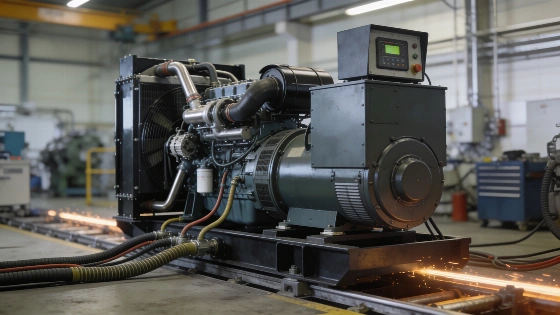
Data-centre commissioning can stall when backup equipment misses the site schedule. Baudouin says its M55 series can be produced and delivered in four to six months. The company also cites Uptime Institute pre-approval and compatibility with hydrotreated vegetable oil, or HVO.
The family includes the 12M55. Baudouin also offers the 16M55, with the 20M55 completing the range. The company describes the platform as compact and scalable. It is designed to help consultants and engineering, procurement and construction teams size backup capacity without using space they do not need.
Footprint and delivery timing
Baudouin is pitching the M55 against a market where turbine and switchgear lead times can exceed two years. The wider electrical-equipment chain faces similar delays. Nexans says average manufacturing lead times for large power transformers exceed two years, while some high-voltage equipment has been reported at up to five years, as outlined in its data centre grid analysis. A separate industry review puts generator-transformer lead times at as much as 144 weeks, or nearly three years. It gives large power-transformer lead times of two to three years.
That makes Baudouin’s stated four-to-six-month window attractive to procurement teams working towards data-centre go-live dates. But a generator is only one link in a site’s power chain. Transformers and switchgear sit elsewhere in the system. Sites also need automatic transfer equipment, while fuel infrastructure requires its own planning.
Size matters on site, too. Baudouin says the M55’s compact design can reduce the space needed for skids. The company also says it can cut shipping weight. That may ease crane planning, while reducing demands on foundations and enclosures.
Under schedule pressure, delivery timing can make or break a procurement plan.
Pre-approval and factory testing
The M55 series is Uptime Institute pre-approved and specified to meet ISO 8528 G3-5 load acceptance performance. Baudouin says those credentials matter in data-centre design reviews, where critical facilities must handle rapid changes in load.
Backup generation is part of a wider power architecture. Data centres commonly use UPS systems or energy storage to carry the load while generators start and power is switched. Designers also plan for switchgear and transfer equipment. Fuel autonomy and redundancy need separate consideration. In a Tier IV facility, losing grid power must not interrupt service to critical IT loads, as described in this overview of Tier IV design.
An expansion under way at Baudouin’s Cassis facility in France is adding dedicated test-bench capacity. The company says every M55 unit will receive full load testing and validation before leaving the plant. The expansion also addresses procurement requirements for certificates of origin and supply-chain traceability.
HVO compatibility
The M55 series can run on HVO when the fuel meets the appropriate specifications and operating conditions. Baudouin says the option gives operators a way to lower the lifecycle carbon intensity of backup power while keeping the reliability and responsiveness critical facilities require.