
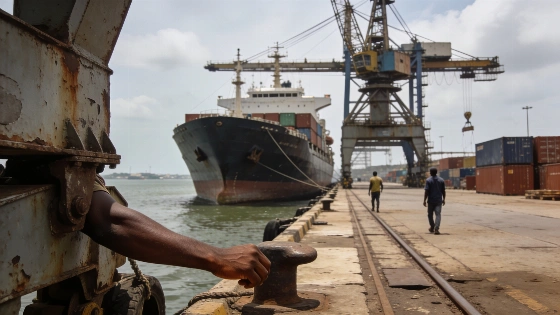
Ships spent an average of 6.1 days at Apapa in the first half of 2026, up from 5.9 days a year earlier. At Tin Can Island, the average rose from 4.4 days to 5.1 days, according to Nigerian Ports Authority (NPA) data.
Longer stays can delay vessels' journeys to their next commercial destinations and add to shipping expenses that may feed through to freight charges. Businesses also face costs when cargo remains in port. For an importer with 10 containers, an assumed extra charge of N63,000 per container each day would amount to N6.3 million over 10 chargeable days. Actual charges depend on shipping-line terms and the circumstances of each shipment.
Port delays have also been reported as a burden for exporters, including in this account of exporters' delay costs. For manufacturers that rely on imported machinery or raw materials, late deliveries can disrupt production and raise inventory expenses. Exporters face uncertainty when meeting delivery commitments.
Reconstruction has yet to start
The N1.3 trillion programme, estimated at approximately £746 million, was intended to modernise ageing facilities at Apapa and Tin Can Island. It forms part of the NPA's wider Port Modernisation Programme, valued at about US$1 billion and covering Apapa, Tin Can Island, Calabar, Rivers, Delta and Onne. Physical reconstruction had not begun after the government missed two previously announced timelines. Work was initially expected to start in the second quarter of 2026. By July, NPA Managing Director Abubakar Dantsoho said preliminary investigations, including borehole drilling, were complete and contractors were expected to mobilise in the third quarter. That schedule was also missed.
Apapa was commissioned in 1926, while Tin Can Island began operations in 1977. Nigeria has invested in newer facilities such as Lekki Deep Sea Port, but substantial commercial cargo still depends on the two older ports. Planned works include repairs to quay walls and berths, replacement of paved areas, new fenders and mooring structures, plus improvements to navigational channels and marine structures. The programme also includes equipment-support facilities for modern ship-to-shore container cranes. Fully phased infrastructure and equipment upgrades have been projected to cut vessel turnaround times by up to 50 percent.
The NPA previously put the reconstruction period at about 48 months. Further delays to the start could push completion beyond the anticipated late-2030 period. A source within the authority said the Federal Government needed to meet counterpart funding commitments before the project could advance fully. The amount required and whether the funds had been released were not disclosed.
Financing and operating constraints
The financing arrangement followed an initial US$700 million mandate letter signed by the NPA and Citibank Nigeria on 17 April 2024. The UK Export Finance facility for Apapa and Tin Can Island was reported at £746 million, with at least £236 million in supplier contracts expected to go to UK businesses. These include a £70 million British Steel contract to supply 120,000 tonnes of steel billets. The borrowing's commercial case will depend on whether upgraded facilities deliver measurable gains in trade efficiency, cargo-handling capacity and port revenue.
Construction alone would not remove delays caused by customs procedures, regulatory inspections, cargo documentation or road transport. Coordination among government agencies and faster cargo-clearance processes will also affect how quickly goods move through the ports. The wider modernisation agenda also includes inland container depots, rail-port links and cold-chain facilities, as well as strategic partnerships and private-sector investment.
The NPA has also promoted export-processing terminals and dedicated cargo-transit corridors to reduce logistics bottlenecks and support non-oil trade. Managing Director Abubakar Dantsoho presented the initiative at the 40th Lagos International Trade Fair in November 2026, describing the measures as a way to cut export-cargo turnaround time. The authority's export-terminal and cargo-corridor initiative is separate from the pending physical reconstruction at Apapa and Tin Can Island.
The Nigerian Shippers' Council reported average cargo dwell time of 13 days in 2024, compared with 14.1 days in 2011. Industry estimates put dwell time at Nigerian ports between 10 and 18 days in 2026, against approximately seven to 10 days at Lomé and Tema. Longer stays can bring storage and container detention charges, adding pressure on businesses already managing high logistics expenses.








