
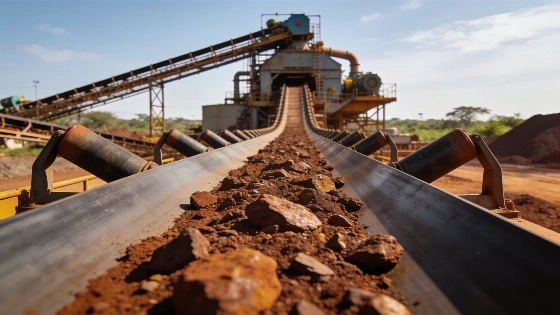
More than 300 suspected illegal miners have been arrested, and over 100 mining sites recovered and returned to legitimate owners, Solid Minerals Minister Dele Alake said. He also alleged that some affected operators were sponsoring campaigns to disband the Mining Marshals, a security initiative set up to tackle illegal mining and protect legitimate title holders.
The enforcement figures accompany a sharp rise in sector receipts. Alake said annual revenue topped ₦100 billion in 2026, compared with about ₦6 billion when the current administration took office. He put revenue at ₦38 billion in 2024 and ₦70 billion in 2025, and said the Central Bank of Nigeria had informed him that receipts had passed the ₦100 billion mark. A report citing the CBN's solid-minerals collection data put collections at ₦101.11 billion in the first nine months of 2026, up 95.2 per cent from ₦51.79 billion in the same period of 2025. June collections were reported at ₦16.31 billion, compared with ₦4.75 billion in June 2025, according to the collection figures.
Reforms and local processing
Alake attributed the growth to sector reforms and policies promoting local value addition. He also cited the digitisation of mining processes and efforts to clean up industry operations, saying the figures reflected deliberate policy implementation. The Ministry of Solid Minerals Development has also linked formalisation and tighter regulation with increased receipts.
At the Nigeria Now! Investing in Energy, Infrastructure and Mining Summit in Abuja on 19 November, President Bola Tinubu argued that Nigeria must develop local capacity to process its mineral resources. He said the country was determined to move beyond exporting unprocessed resources. Beneficiation and processing, he said, should support domestic industries and skilled employment, while bringing benefits to host communities. Tinubu's remarks set out a policy objective to deepen processing at home, as Vanguard reported.
Tinubu called for better geological data and transparent licensing. He also urged responsible exploration, along with greater investment in processing and beneficiation, while saying a stable investment climate and regulatory certainty were needed to attract private-sector participation. He framed mineral processing as part of a broader industrial agenda, connecting energy and infrastructure investment with jobs, while also promising benefits for host communities.
Logistics infrastructure is another part of the government's economic agenda: Tinubu approved the operationalisation of the Tsamiya Inland Dry Port in Kebbi, as an earlier report covered. The port decision concerns trade access, while Alake's remarks focused on enforcement and building value chains for minerals within Nigeria.
Other sectors cited at the summit
Minister of Marine and Blue Economy Gboyega Oyetola said revenue generated by agencies under his ministry rose from ₦700.79 billion in 2023 to ₦1.83 trillion in 2025. He cited progress in maritime security and port reforms. He also pointed to approval of Nigeria's first National Policy on Marine and Blue Economy.
Oyetola urged investors to consider opportunities in ports and shipping. He also named shipbuilding and fisheries. Aquaculture and maritime tourism were among the opportunities he cited, as was logistics. Alake, meanwhile, defended fuel-subsidy removal, saying savings had been redirected to infrastructure projects across Nigeria's six geopolitical zones.
The summit, themed "United Nigeria, New Opportunities, One Investment Destination," was scheduled to conclude on 20 November 2026.








