
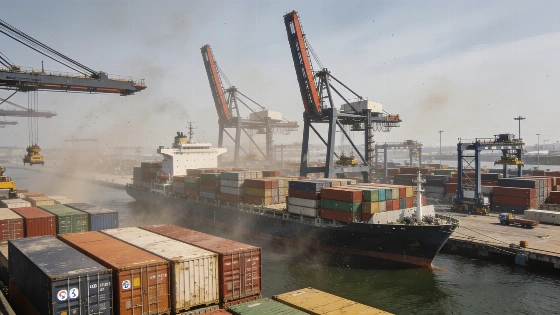
More than 70 per cent of cargo destined for other regions still passes through Lagos ports, Dr Adegboyega Oyetola said. That contributes to congestion around Apapa and the loss of productive man-hours. The minister spoke at the 2026 World Maritime Day celebration in Lagos on 16 October, saying cargo bound for destinations outside the city continued to move through its ports.
The Minister of Marine and Blue Economy said the government is prioritising modernisation at Onne and Warri, with Calabar also on the list, to ease pressure, reduce logistics costs and support economic activity nationwide. Its aim is to redistribute cargo flows to other maritime hubs. Port development is linked to dry ports, production centres, roads, railways and inland waterways. Nigeria Info reported that weak transport connections, navigation constraints and shipper preference for Lagos have limited the use of alternative ports.
Building a wider port network
Oyetola said the plans form part of President Bola Tinubu’s Blue Economy agenda. The government is also pursuing proposed deep seaports at Agge and Bakassi, as well as Bonny and Gateway; Ibom and Ondo are also included. Modernisation is under way at Apapa and Tin Can Island ports. The six proposed deep-sea port locations are Ibom, Bakassi, Agge, Gateway, Ondo and Bonny.
The aim is an interconnected system linking seaports with inland dry ports and production centres. The government plans to improve those connections by road and rail, with inland waterways also part of the network. The goal is to lower cargo transport costs and strengthen non-oil exports. Oyetola also identified river ports, including Onitsha and Baro, as important links between businesses and local and international markets.
The government is working with relevant agencies and private investors to improve port infrastructure and cargo handling, as well as navigational channels and transport connections. The minister said the reforms would encourage investment and create jobs. They are also intended to address concerns from importers and exporters in the South-South and South-East about the added cost of moving goods through Lagos.
Port activity figures show the wider utilisation challenge. BusinessDay reported that Nigerian seaports handled 1,566,162 TEU in 2023, down 6.8 per cent from about 1.68 million TEU in 2022. Vessel calls fell 4.5 per cent over the same period, from 3,957 to 3,778. The publication also highlighted the viability test facing new port projects amid declining volumes.
In a report published on 19 October, Majorwaves Energy Report said the government had approved modernisation at Onne, Rivers and Delta, as well as Calabar, to improve cargo handling, reduce vessel turnaround times and strengthen regional connectivity. Procurement procedures for upgrades at Warri, Port Harcourt, Onne and Calabar began on 3 April 2026. Apapa and Tin Can Island upgrades had been approved earlier.
Regulation and maritime safety
Oyetola described the Nigerian Ports Economic Regulatory Agency Act, 2026, recently signed into law, as a step towards stronger economic regulation, fair competition and improved service delivery. President Bola Tinubu assented to the Act in June 2026, establishing a statutory framework for port economic regulation after nearly two decades of efforts to institutionalise the function. In October, the ministry presented the gazetted Act and announced the immediate transition from the Nigerian Shippers’ Council to the Nigeria Ports Economic Regulatory Agency, or NPERA. The ministry said the new framework is intended to promote competition, protect port users and strengthen investor confidence. Voice of Nigeria reported on the transition set out in the Act.
He said the ministry would continue implementing policies to make Nigerian ports more competitive and attractive to global shipping lines.
In a goodwill message, Sen. Wasiu Eshinlokun, Chairman of the Senate Committee on Marine Transport, called for an end to attacks on seafarers in the Strait of Hormuz. He said the safety of Nigerian seafarers on international waters remained a priority for the National Assembly.
The News Agency of Nigeria reports that World Maritime Day is held annually to highlight shipping safety and maritime security, alongside protection of the marine environment.








