
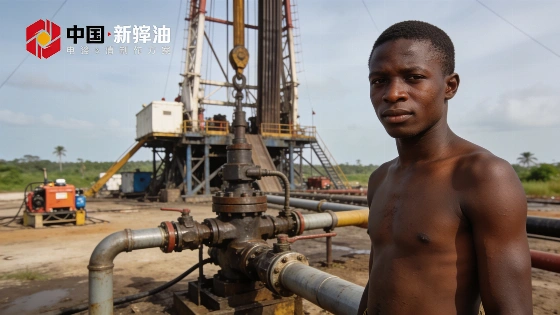
The Nigerian Upstream Petroleum Regulatory Commission expects 22 recently awarded oil-block operators to contribute at least 250,000 barrels per day within five years, a projected addition rather than current production, information from the commission’s target. At full capacity, that would amount to about 91.25 million barrels annually. But many projects need investment before they can generate the cash flow lenders require. NUPRC has linked the awards to a “drill-or-drop” policy intended to deter companies from holding licences without advancing exploration and development.
The target is not a production outcome. Industry sources say indigenous companies are struggling to finance assets acquired from international oil companies or awarded by the government, casting doubt on the pace of development.
Lenders want producing assets
Banks are wary of funding projects that have yet to generate revenue. Industry sources say lenders cite past bad loans to local operators and the lengthy, costly takeovers that followed. Many now require production-backed cash flow before approving development finance.
Operators argue that this condition blocks the work needed to start production. Exploration and appraisal take time. Drilling, production facilities and evacuation infrastructure all require considerable capital.
The funding challenge affects newly licensed firms as well as buyers of existing upstream assets. Seplat Energy completed its acquisition of ExxonMobil’s Mobil Producing Nigeria on 12 December 2024, after announcing the agreement on 25 February 2022. The portfolio included interests in four oil-mining leases, the Qua Iboe export terminal and a 51% stake in the Bonny River natural-gas-liquids recovery plant. Seplat repaid the final $100 million of acquisition-related debt in October 2026, Nairametrics reported. Oando completed its acquisition of Eni’s Nigerian Agip Oil Company in August 2024 in a transaction reported at about $783 million. Eni later completed the sale of Nigerian Agip Energy and Natural Resources to Apex Global Energy, a subsidiary of Sterling Oil Exploration and Energy Production Company, on 26 October 2026. The new owners must fund development and infrastructure work while meeting environmental obligations.
At an assumed average price of $100 per barrel, the target’s theoretical gross market value would be about $9.125 billion a year. Using the stated exchange rate of N1,350 to the dollar, that equals N12.318 trillion. These are gross values. Realised prices, costs, contracts and actual production would determine earnings.
Development costs before revenue
Petralon Energy founder and chief executive Ahonsi Unuigbe said the company had previously raised about $60 million in debt and equity to acquire an interest in an oil and gas asset, including roughly $45 million in debt. He said raising money for later development remained difficult.
The company spent about two years and several million dollars studying another asset. Its work identified approximately 17 million barrels of proved and probable reserves, or 2P reserves. Unuigbe said the reserve estimate had not solved the financing problem. Petralon also incurred $12 million in interest expenses in 2025.
That gap between assessing an asset and financing its development comes as operators face other investment demands. Nigeria’s wider energy investment debate has included calls for stronger environmental reviews, as covered in an earlier report.
Smaller operators without established production or reliable cash flow are finding conventional debt particularly difficult to secure. One company director said some firms have turned to equity investment. Industry experts also identified technical partnerships and joint ventures as ways to share development risk.
Risks extend beyond finance
Akintunde Thomas-Owoseni, an executive principal at Standard Chartered Bank, said reserve-based lending depends on reserve value and expected production revenue. Fidelity Bank’s head of energy and power, assistant general manager Emeka Nkemakolam, warned that short-term commercial loans can leave operators facing repayments before long-term projects generate enough income. Foreign-currency borrowing adds exposure when revenues and repayments are in different currencies.
Operators counter that lenders’ conditions create a trap: companies need capital to begin production, yet struggle to borrow without the production and cash flow banks demand.
Efe Loyds, managing director of Warri-based Bokas Rigs, said smaller licence holders frequently lack the balance sheets and producing assets available to larger operators, along with their established banking relationships. Dr. Wale Ilori said delayed development could postpone additional output and constrain export earnings and government revenue.
Ilori also cautioned that financing is only one factor affecting output. Oil theft and pipeline vandalism disrupt operations, while infrastructure constraints and declining production from mature fields also weigh on output. He said operators had turned to equity partnerships and joint ventures, as well as farm-in agreements and project-specific finance. Separately, NUPRC reported that domestic refineries received more than 127 million barrels of Nigerian crude oil and condensate between January and September 2026. The commission described the deliveries as improved implementation of the Domestic Crude Supply Obligation, AllAfrica reported.








