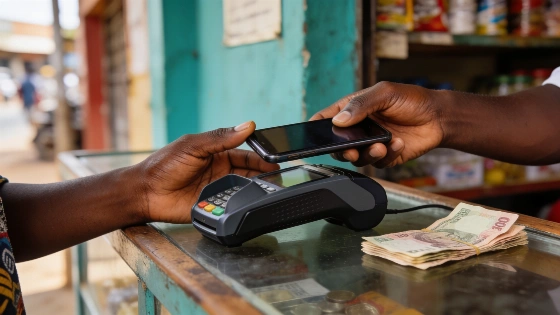
Regulators in Maputo have handed PawaPay a green light that fintechs have chased for years. The Bank of Mozambique has granted the company a payment service provider licence, letting PawaPay’s local arm, Quidexplus Mozambique, sign up merchants directly and process their payments under the central bank’s eye. The company says onboarding starts within days, a move that could shake up how digital payments work in a country where mobile money leaves banks in the dust.
The number of mobile money agents in Mozambique reached 494,955 in the second quarter of 2026, highlighting the scale of mobile money as the primary channel for financial access in the country.
Mobile money’s grip and shifting rules
Bank branches play a minor role in Mozambique’s payment scene. The country’s three main mobile money services—M-Pesa (Vodacom), e-Mola (Movitel), and mKesh (Tmcel)—held 24.6 million accounts by November 2025, Bank of Mozambique data shows. That’s nearly quadruple the number of bank accounts. PawaPay estimates over 12 million of these mobile wallets are active.
Mozambique’s payment market underwent a major legal overhaul with Law 15/2026, which came into force in August 2026 and established the Bank of Mozambique as the sole licensing and supervisory authority for all payment operators, giving existing companies 180 days to adapt.
Licence details and regulatory shakeup
Mozambique’s rules for payment companies have shifted since a 2019 decree split the market into e-money institutions, money transfer outfits, and payment aggregators. PawaPay fits the aggregator slot. The company calls itself “one of the first” PSPs licensed in Mozambique, but the central bank keeps its list of licensees private. PawaPay hasn’t disclosed the exact licence category or the date it was issued.
Law 15/2026, which took effect in August 2026, put the Bank of Mozambique in charge of licensing and supervising all payment operators. Existing players got 180 days to comply. PawaPay hasn’t said if its licence falls under this new law or the previous regime.
Expansion play and regional reach
PawaPay has built a continental footprint since its 2020 launch. The company claims to process about 7 million transactions daily across 23 African countries, with a running total of 3.5 billion transactions. Its single API model means businesses avoid separate deals and integrations with each mobile money operator, smoothing cross-border payments for sectors like ride-hailing and remittances.
Talks are underway with M-Pesa, e-Mola, and international remittance firms to enable inbound payments—money sent from abroad to Mozambican wallets. PawaPay has already set up similar flows in Uganda and Rwanda.
The Mozambique licence follows a similar approval in Kenya, where Quidexplus Kenya Limited appeared on the Central Bank of Kenya’s list of 44 licensed payment service providers as of August 2026. In Kenya, PawaPay supports M-Pesa payouts. In Mozambique, merchants can collect from M-Pesa users and pay out to e-Mola users. Full wallet coverage in Mozambique will depend on future integration of e-Mola collections and mKesh, with no timeline yet.
PawaPay’s regulatory win in Mozambique puts it in a stronger position as a payment aggregator under direct central bank oversight. The company’s next steps hinge on expanding wallet coverage and unlocking inbound remittances. For now, the licence sets a new operational benchmark for fintechs in the region.