Kenya's foreign reserves fall by Ksh85 billion as import cover slips
The CBK reported reserves of about Ksh1.81 trillion on November 19, with import cover at 5.6 months against a four-month statutory floor.
The revised Budget Policy Statement lowers projected spending and net lending to KSh5.236 trillion and cuts planned net domestic financing by KSh270.2 billion. Net foreign financing rises to KSh570 billion as the Treasury projects a KSh1.229 trillion deficit.
Remittances totalled USD430.5 million in October 2026, down from USD438.8 million a year earlier. The shilling was unchanged against the U.S. dollar at Ksh129.96 on November 12.
Absa Next gives customers access to five unit trust funds from their phones. The cited Treasury bill auction recorded average rates below 10 per cent.
Kenya's producer prices fell 2.36% quarter-on-quarter in Q3, while consumer inflation rose to 7.3% in October. Lower manufacturing and electricity prices contrasted with rising household food and transport costs.
Money market fund returns are down from 14-17 per cent two years ago. Co-opTrust Investment's Samuel Ngigi says the current range is normal as market rates fall.
The acquisition brings Seesail's business platform and financial services for small businesses into Payaza's ShopAza. Financial terms were not disclosed.
Quarterly pre-tax profit reached KSh95.20 billion as lending expanded and the share of non-performing loans dropped below 14% for the first time since December 2022.
The Kenya Bankers Association wants more time to assess how proposed capital buffers could affect credit and banks' ability to raise capital. The rules are scheduled to take effect on January 1, 2027.
Banks and mortgage finance companies must meet the KSh 5 billion core-capital threshold by 31 December 2026. The CBK measures eligible capital after deductions, while earlier reporting says the Finance Act 2026 changed the longer-term schedule.
A merger could eventually require systems integration, but no formal agreement or customer transition plan has been announced.
Ndindi Nyoro's proposal could unite groups with about Ksh4.55 trillion in assets but neither bank has announced a merger agreement.
Eligible Kenyan financial institutions can apply for wholesale financing through the World Bank-backed facility to support viable MSMEs.
Supercoin says it has applied to issue a Kenyan shilling-backed stablecoin. The proposal faces licensing requirements and competition from existing payment systems and dollar-backed tokens.
KDIC says statutory rules prevent it from covering Sacco deposits, but it is ready to provide technical support for schemes run by the sector.

Kamau Thugge told a Senate committee that centralising county deposits at the CBK could improve oversight, while senators warned that approvals could threaten devolution and delay services.
The Central Bank of Kenya has authorised Payaza Africa Limited to provide payment gateway services. The approval follows a Zambian payment authorisation by 17 days and allows the company to serve Kenyan merchants.
The Nairobi market extended its recovery as Co-operative Bank climbed 7.89% after reporting higher nine-month profit. Quick Mart PLC began trading during a week when bond turnover rose 61.06%.
Kenya's cryptocurrency businesses must obtain licences from the Central Bank of Kenya or the Capital Markets Authority now that the transition period for existing providers has expired. Gazetted regulations formalise oversight and set out licensing procedures.
Salute iWorld is discussing purchase arrangements with three leading Kenyan savings groups as it reports a doubling in buy-now-pay-later sales during FY2025/2026.
Parliament's Committee on Delegated Legislation has directed the Central Bank of Kenya to suspend its proposed digital-credit rules. MPs cited penalty limits, broad regulatory powers and drafting discrepancies as they called for the provisions to be reviewed.
The company wants lower-emissions cement to count more in public tenders and green-finance rules as it expands production capacity and pursues a potential refinery supply contract.
Average asking prices in Nairobi's established suburbs rose 2.3% in the third quarter, while construction input prices declined. The gap leaves households facing different costs depending on whether they are building or seeking an existing home.
WayaWaya Banking will combine Choice Bank's regulated infrastructure with AI tools designed to tailor dashboards and services to customers' financial activity in Kenya.
Kenya's 2026 regulations require non-deposit-taking credit providers to explain AI-driven lending decisions and tell customers when they are interacting with AI. The framework also sets human oversight expectations and raises licensing and annual fees.
Murban crude fell nearly 15% between October 29 and November 5, ahead of EPRA's review of maximum pump prices for the next cycle. Any reduction in Kenya will depend on average landed costs and whether the government draws on its stabilisation fund.
At Nairobi's 11th NCBA Economic Forum, speakers cited up to 47 exporter charges and lending rates near 14.4 per cent as barriers, while proposing regulatory oversight and measures to widen SME credit.
The High Court has ordered restrictions on accounts holding Sh303.2 million across five banks and directed that identified cryptocurrency be converted and placed in escrow as Equity Bank pursues its recovery claim.
Boniface Mungania's appointment took effect on 1 November after he had twice acted in the role. M-PESA generated KES 100.07 billion in the six months to September.
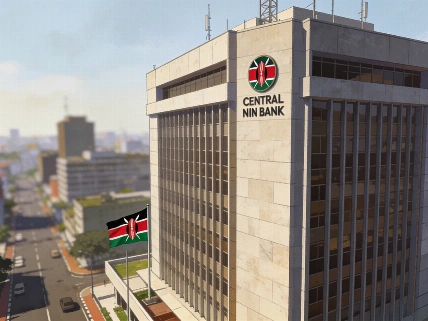
The bank is targeting affluent clients and cross-border businesses as domestic lenders compete through broad customer networks and mobile platforms.

Kimani Francis Kuria has set out legislative priorities intended to diversify investment and widen access to Kenya's capital markets. The proposals come as pension assets reach Sh3.167 trillion, with nearly half invested in government securities.
Crypto transactions rose 38% in the year to June 2026, putting Kenya third in Africa. Stablecoins feature prominently as proposed capital thresholds and licensing requirements reshape the operating environment.
Kenya's proposed National Payment System Bill would let authorised fintech providers access customer financial information under consent and data-protection rules. It would also introduce new licence categories and stronger oversight by the Central Bank of Kenya.
The Nairobi Securities Exchange and The Abojani will hold a half-day financial literacy session for 12- to 17-year-olds on December 4. It will cover money management and investment options.
A shift towards skilled jobs has reduced the number of Kenyans remaining in Saudi Arabia, while remittances from the country more than halved year on year.
The Central Bank of Kenya says one or two lenders may struggle to reach KSh5 billion by December 2026, even after the Finance Act 2026 removed annual milestones on the path to KSh10 billion.
CBK Governor Kamau Thugge says lower lending rates depend partly on Treasury borrowing less at home, alongside monetary policy. The 2025/26 domestic borrowing figures he cited include both KSh994.8 billion and KSh987 billion.
The proposed electronic system would let Kenyan borrowers transfer collateral between banks with fewer legal and administrative costs. CBK says easier switching could support competition under risk-based credit pricing.
Governor Kamau Thugge told MPs that a US$7.458 billion surplus in financial and capital flows outweighed a US$4.68 billion current account deficit. He linked the external position to reserve accumulation and flagged uncertainty over expected Treasury financing.
Kenya’s annual inflation rate rose to 7.3% in October, its highest level since July 2023. Higher transport and food prices led the increase.
LOOP’s new business bundle combines payment collection and stock tools with sales-based lending. Merchants must build 90 days of activity before assessment, and loan approval is not guaranteed.
The Finance Act 2026 brings fees for specified payment services into Kenya’s 16% VAT structure. One bank notice sets 1 November 2026 as the start date, while ordinary person-to-person transfers are treated separately.
Reported losses from banking fraud in Kenya rose to approximately Ksh1.594 billion in 2024 as cases more than doubled. Mobile banking accounted for the largest reported losses among the listed channels.
Nairobi International Financial Centre CEO Daniel Mainga says the proposed fund is intended to back technology and AI businesses, with establishment targeted between 2026 and 2027.
Kenya’s Competition Authority found the proposed takeover unlikely to harm banking competition. The Basic Bank of Kenya must assess the ownership change before the deal can proceed.