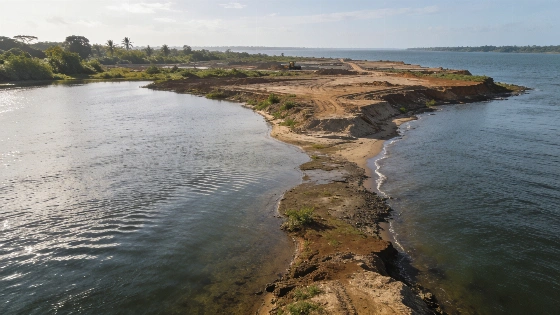
More than 80 per cent of Nigeria's foreign trade flows through Lagos, Vice-President Kashim Shettima said. That concentration strains maritime infrastructure and contributes to shipping delays and higher goods costs. He made the remarks at the November 2026 groundbreaking ceremony for the proposed Bakassi Deep Seaport in Ikang, Bakassi Local Government Area, Cross River State.
Shettima, representing President Bola Tinubu, described the $3.5 billion project as a way to connect the South-South and South-East with the Middle Belt and North-East, and link them to regional and international markets. The state government has framed the port as an eastern maritime corridor intended to reduce Nigeria's dependence on Lagos for international trade. Shettima said it would complement Lagos facilities and spread maritime activity more evenly.
Funding and execution
Governor Bassey Otu said the project had faced political, administrative, legal and environmental challenges after earlier efforts stalled. His administration revived the project, which was linked to Afreximbank partnership and financing work in February 2025. The state said it had completed environmental, hydrographic, geotechnical and geophysical assessments. Otu added that the Federal Executive Council had granted the project its third approval. Federal processes culminated in a Certificate of Compliance and final approval, alongside an initial funding approval of $2.27 billion under the proposed public-private partnership. The Cross River government's announcement described the project as moving toward implementation.
The proposed port is expected to operate through a public-private partnership. The overall development has been described as a $3.5 billion project, while the state has cited $2.27 billion as its initial funding approval. Otu called on local and international investors to consider opportunities in shipping and maritime logistics, as well as fishing, shipbuilding and related industries.
The President of the African Export-Import Bank, Dr George Elombi, was represented at the ceremony by Mrs Kanayo Awani, the bank's Executive Vice-President for Intra-African Trade. She said Afreximbank was acting as mandated lead arranger and financial adviser. The bank is helping structure the partnership, address early-stage risks and mobilise regional and international investment.
Trade links and local cargo
Shettima said the port could give agricultural produce and manufactured goods access to international markets. He cited cocoa from Ekum and rice from Ogoja as potential cargoes, and also mentioned timber and mineral resources. The state has also identified agricultural, manufacturing, mineral and timber exports as part of the port's commercial rationale. Shettima said the project could create jobs for engineers and truck drivers, alongside demand for crane operators, welders, customs officers, traders and other service providers.
Afreximbank said the port could strengthen Nigeria's eastern maritime corridor and support trade under the African Continental Free Trade Area. The proposed gateway is intended to connect producers in Cross River and neighbouring regions with regional and international markets. Shettima also linked the port's prospects to supporting infrastructure, including road and rail connections, electricity, efficient customs services, the Superhighway and free-trade zones. The delivery challenge echoes a wider commercial concern raised in an earlier trade analysis: announced infrastructure projects must become operating activity to deliver wider economic gains.
Shettima urged people in Bakassi and Cross River State to protect the project from political interference and misinformation. He described it as an opportunity to expand the state's economic prospects. The groundbreaking marked a public milestone for the project; the port is not yet handling cargo. Cross River Governor Bassey Otu has described it as a transformative undertaking intended to strengthen the state's economic prospects and Nigeria's regional and international trade links, as outlined in the state government's project overview.