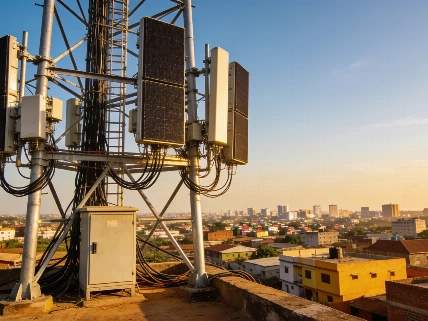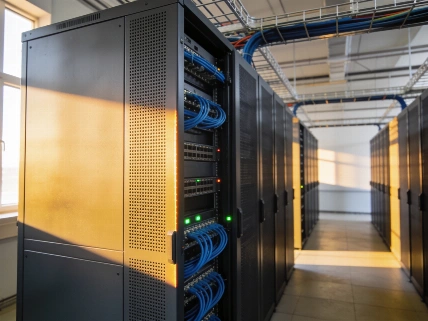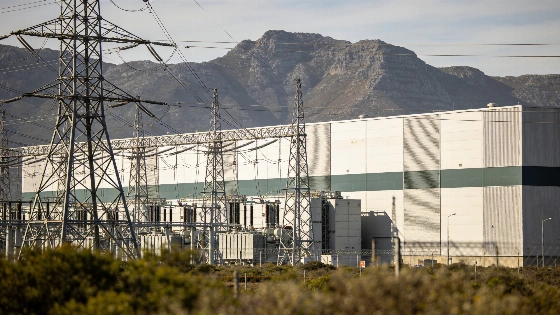
The estimate covers planned projects, not electricity already being used by operating data centres. PressPortal reported on 16 October that facilities in Cape Town could require a combined 580MW, more than a third of the city’s peak demand of 1 676MW. The expected growth is tied to cloud services and AI workloads. South Africa’s grid is facing a separate squeeze.
Eskom’s planning points to roughly 5GW of coal-fired capacity retiring from 2029. If that overlaps with rising demand, electricity could become a constraint for businesses running more AI workloads locally, especially when new facilities need grid connections. PressPortal’s report outlines both the retirement figure and the projected data-centre demand.
Power reliability shapes the cost of AI
Securing graphics processing units (GPUs) is only one part of the job. The chips handle much of the computation involved in AI, but they need a reliable electricity supply. Businesses have to weigh where they can afford to run workloads against how they would keep operations going if power becomes more constrained.
AI costs are already hard to forecast. Cloud providers use different pricing models, and greater use of more capable models can drive up computing demand and spending. Actual bills may diverge sharply from initial estimates.
Power constraints could widen that gap. Higher electricity costs or less reliable supply would raise expenses for local data-centre users and make computing capacity harder to keep available. Operators in South Africa also use private renewable-energy agreements and wheeling, which transmits electricity from a private generator through the grid. The National Transmission Company South Africa says curtailment can follow network constraints or excess supply during low-demand periods, particularly around midday. TechCentral reported that curtailment can reduce the renewable power delivered under wheeling arrangements.
Diesel backup has limits
Diesel generators can keep data centres running during interruptions, but operators do not always disclose their capacity. That leaves outsiders with little basis for judging how long individual facilities could withstand a prolonged disruption. Fuel supply and logistics would also become major challenges if several large sites needed hundreds of megawatts.
Eskom’s open-cycle gas turbine fleet runs on diesel and provides additional electricity to the national grid. Its combined capacity is less than 3GW. Those turbines serve a different purpose from data-centre backup systems, but the comparison shows the scale of generation needed to support electricity-intensive operations.
Power is only one part of the infrastructure challenge. In South Africa’s telecommunications sector, DFA has completed the first phase of an upgrade costing more than R800 million and is now shifting towards wider coverage and enterprise links, according to an earlier network report.
Water adds another pressure in Cape Town. Data centres use it directly to cool servers and, when independently powered, indirectly through electricity generation, according to a Development Bank of Southern Africa report cited by Cape Business News. Equinix South Africa managing director Sandile Dube said the company has no near-term plans to build its own Cape Town facility. Its JN1 site uses about 4MW now, with consumption potentially rising to 20MW after expansion. That operating load contrasts with the 170MW capacity approved for a separate Equinix data-centre project at King Air Industrial, near Cape Town International Airport.
Housing Assembly and Foxglove appealed the city’s approval of the 170MW project on 13 October 2026. They cited concerns about the project’s environmental impact and its demands on electricity and water. The groups also called for further data-centre approvals to be paused until the city establishes a common assessment framework. The City of Cape Town denied that the applicants had been locked out of the appeal process. Reports published in October said the appeal was still under way. Eyewitness News covered the dispute.
Workloads may need to move
Local computing can give organisations more control over where data is held and reduce reliance on overseas infrastructure. But concentrating workloads in one place exposes them to local power shortages and rising energy costs. Service agreements may need to account for changing electricity constraints and their effect on continuity arrangements.
Businesses can compare local data centres with international cloud environments. They can then assess other available facilities against operational needs. Data governance requirements and cost will also shape the choice.
That kind of flexibility takes preparation. Applications must be able to run across different environments, and organisations need to know how quickly they can shift processing capacity. They also have to establish whether data will remain accessible without transfers that are expensive or time-consuming.
One option is to leave data where it is and direct computing tasks to suitable infrastructure elsewhere. Where systems and data governance requirements allow, businesses could use alternative providers to handle spikes.