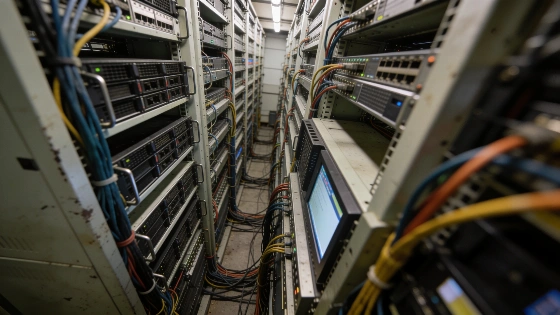
AI workloads can require a different data centre design from conventional CPU-based computing, Mohamed Amin told a media roundtable in Johannesburg. Dell Technologies says that gap is affecting readiness for production-scale AI in South Africa.
The company cited its Modern Enterprise Readiness Study 2026, which found that 48% of modern data centre environments in South Africa lack infrastructure capable of handling AI-specific workloads. In a release to Hypertext, Dell put it this way: 48% of South African leaders say their data centres and infrastructure are not fully ready for their most demanding workloads at production scale. Dell conducted the study with Vanson Bourne, surveying 50 South African business and IT decision-makers as part of a global poll of 2,950 respondents across 35 countries. The 48% figure reflects respondents' assessment of readiness, rather than an audited count of South African data centres, as EDnews Africa reported.
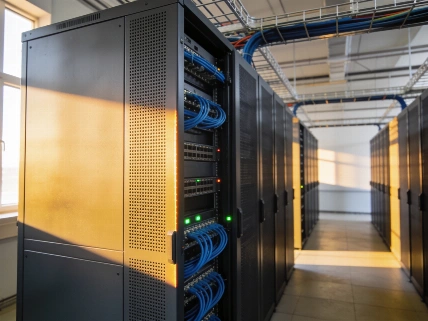
Different demands on data centre design
"This is actually a warning as a friend to South Africa, and we have been telling everybody," Amin said at the media roundtable. He said operators had found existing data centres inadequate when they tried to run AI applications because those workloads require a different design.
Amin described the shift from a conventional CPU server serving one application to virtualisation that lets several applications share a server. AI and GPUs operate differently, he said: a node must work across applications. Dell is advising local operators on the infrastructure changes involved, but implementation decisions rest with the operators.
The company says many local customers and partners have already invested significantly in earlier data centre technologies. Dell is discussing modular environments with them, but operators have not been reported as having decided to switch.
Infrastructure and market conditions
South Africa's data-centre IT-load capacity was estimated at 435 MW for 2024 in a 2025 study by the Development Bank of Southern Africa and the National Planning Commission, as detailed by CIO South Africa. Applying an illustrative power-usage effectiveness ratio of 1.3 equates that capacity, at full utilisation, to about 5 TWh of annual electricity demand, or roughly 2.1% of South Africa's 2025 electricity generation. This is a capacity-equivalent calculation, not measured electricity consumption.
South Africa has 62 data centres, making it the leading data-centre market in sub-Saharan Africa, according to a 2026 International Monetary Fund paper cited by Greenpeace Africa. Cape Town had five data centres approved and two further projects under assessment in the same account. The City of Cape Town amended its Municipal Planning By-law and Development Management Scheme to define data centres and allow them as primary permitted uses in General Industry 1 and Mixed Use 1 zones, subject to the planning framework. The amendment was passed on 26 June 2026 and took effect on 1 October 2026, as Daily Maverick reported.
Power demand also weighs on projects still at an early stage. A proposed data-centre campus at Coega remained at pre-feasibility and could require up to 556 MW of electricity, according to Engineering News. Separately, civil-society groups have called for a moratorium on new AI and hyperscale data centres, citing potential water use of more than 4.4 billion litres a year under conventional cooling assumptions. Industry representatives have pointed to dry-cooling systems and closed water loops as alternatives with minimal ongoing water consumption.
That implementation question sits alongside South Africa's separate connectivity-policy debate. An earlier report covered Icasa's preliminary direct licensing proposal for network operators; it concerns licensing rather than data centre design.
Habib Mahakian, Dell's VP for Southern and Sub-Saharan Africa, said South African organisations were focusing more on scaling AI securely and turning investment into measurable business value. He said leaders were seeking simpler relationships with technology partners, with resilience and accountability also among their priorities.