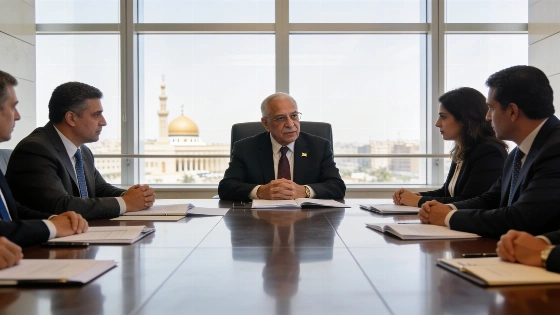
Ahmed Rostom, Egypt's Minister of Planning and Economic Development, sat down with top officials from global financial institutions and credit rating agencies this week. The meeting was not routine. Egypt is moving fast to open up more long-term funding for both state and private projects. The government wants more money flowing, more liquidity, and a bigger role for private business in the economy.
Egypt's external debt decreased from $79.1 billion two years earlier to $76.1 billion as of June 30, 2026, reflecting a reduction of approximately $3 billion.
Structural reforms and private sector focus
Rostom said the government is pushing ahead with structural reforms under the State Ownership Policy Document and the government IPO programme. The goal is simple. Private business needs more space to lead growth. The government is also using digital tools to widen the tax base. It is working closely with the Ministry of Finance, the Central Bank of Egypt, and other ministries to react quickly to global economic changes.
Egypt's economy has not had an easy ride. Global growth is slow. Regional tensions are high. Still, Rostom pointed to signs of strength. Egypt posted a 5.1% growth rate at the end of fiscal year 2025/2026. The trend is holding steady into the current year. A World Bank assessment projects real GDP growth at 5.1% in 2025/2026, up from 4.4% the year before. The World Bank expects a slowdown to 4.3% by 2027. Egypt's National Economic Transformation Programme, built from sector strategies like the Industrial Development Strategy and the National Employment Strategy, is meant to shift the economy away from consumption and toward production, exports, and investment.
Legal reforms and entrepreneurship support
Rostom also announced work to update Egypt's legal and legislative rules for commercial arbitration. The aim is to give investors stronger protections and make Egypt more attractive for both local and foreign capital. The transformation plan includes new support for entrepreneurs, startups, and fast-growing businesses. The goal is to help them compete and grow in the market.
The government aims to reduce Egypt's budget debt to around 81.8% of GDP by the end of the 2025/2026 fiscal year, with a further target of approximately 78% in 2026/2027.