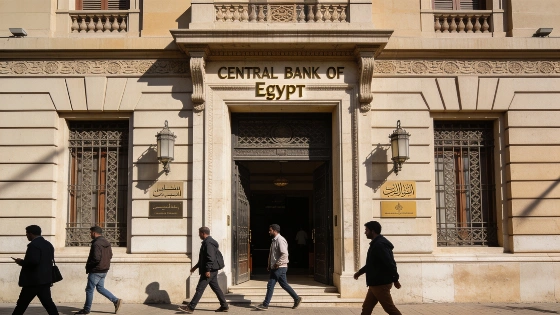
The Central Bank of Egypt (CBE) closed September 2026 with net international reserves at $57.3482 billion. That’s a new record. The number is up from $57.2145 billion in August. A year ago, reserves stood at $49.536 billion. These figures come from official CBE data reported by Al-Ahram.
Egypt’s net international reserves have grown by about $4.74 billion since the start of 2026, with consistent monthly increases from $53 billion in April to $56.29 billion in July.
Gold reserves played a big part in this growth. They hit $17.456 billion, up from $15.843 billion in September 2025. Special drawing rights (SDRs) also jumped, reaching $602 million compared to just $44 million a year earlier. The CBE manages these assets. They are the backbone of Egypt’s reserves. These reserves help keep the currency steady and cover payments abroad.
Egypt’s main sources of foreign currency are still strong. Remittances from Egyptians working overseas, export earnings, and Suez Canal fees all support the reserve build-up. In August 2026, reserves rose by $920 million, or 1.6% over July. That was the previous monthly record. Higher gold prices, economic reforms, a rebound in Suez Canal and tourism revenues, and more remittances all played a role as detailed by Al-Ahram.
Official IMF statistics show that as of August 31, 2026, Egypt continued to conduct transactions with the Fund, including purchases totaling 2.57845 billion SDR and repayments of 1.319307495 billion SDR for the year.
Breakdown of Egypt’s reserve growth
Egypt’s reserves have climbed every month in 2026. The numbers: $53 billion in April, $53.13 billion in May, $55.07 billion in June, and $56.2939 billion in July. The total increase since January is nearly $4.74 billion. Egypt’s monetary policy and ongoing reforms have driven this rise according to Al-Ahram’s business report.
This growth is more than just a number. It gives Egypt more financial credibility and flexibility. The CBE uses these reserves as a buffer. They help Egypt handle market pressure and meet its obligations abroad. The latest data shows Egypt is not just stabilizing its economy. It is building a stronger base for future policy and investment.