The financing gives Ethiopia six years before repayments begin.
Parliament unanimously approved the $145.8 million concessional loan from the International Development Association for the first phase of a power-sector modernisation project. Government Chief Whip Fikadu Tesema said the six-year grace period would limit the immediate financial burden on the country.
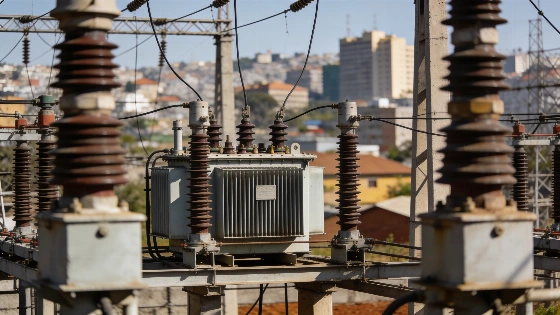
In Addis Ababa, the project will upgrade the electricity transmission network and build new substations. It will also upgrade existing facilities and add underground transmission lines.
Ethiopian Electric Power operates more than 9,000 kilometres of high-voltage lines across the country, along with over 90 substations. The network runs at 132 and 230 kilovolts, as well as 400 and 500 kilovolts, according to The Worldfolio.
Plans for the wider transmission build-out call for more than 11,260 kilometres of new lines and 57 substations. The plans also include an interconnection with Kenya. Separate links are planned with Djibouti and South Sudan.
Grid expansion has been linked to bringing new hydropower generation to consumers. It is also intended to connect wind and solar power to the grid.
The upgrades are part of preparations for Ethiopia to host the 32nd United Nations Climate Change Conference, COP32, in 2027. Fikadu said the loan would help provide a reliable, modern electricity supply for the summit. The Columbia Climate School has described the Addis Ababa summit as an opportunity to put African climate priorities at the centre of the international agenda.
Electricity access remains a national challenge. An Ethiopian News Agency report in 2020 put the share of the population without electricity at about 65%, or 79.3 million people out of a population of 122 million. The agency’s coverage also discussed Ethiopia’s expansion of renewable generation, including the Grand Ethiopian Renaissance Dam.
More recent figures reported by IntelliNews, citing a 2025 World Bank assessment, say 56% of Ethiopians did not receive electricity service meeting the minimum Tier 1 standard. The national plan calls for distribution-network length to rise from 179,000 kilometres in 2025 to 456,000 kilometres by 2030. It targets a cut in distribution losses from 22% to 13%.
The sector’s estimated financing needs for 2026 to 2030 stand at about $9.65 billion. That includes $4.9 billion for distribution networks. The estimate also covers last-mile connections and off-grid systems.
Lawmakers considered the draft proclamation ratifying the loan agreement between the Government of Ethiopia and the IDA during the second regular session of the first year of the House’s seventh parliamentary term. Fikadu said the financing aligned with Ethiopia’s debt financing and management strategy and would contribute to sustainable economic growth.
The House approved the ratifying proclamation as Proclamation No. 1441/2019, completing legislative approval of the financing.