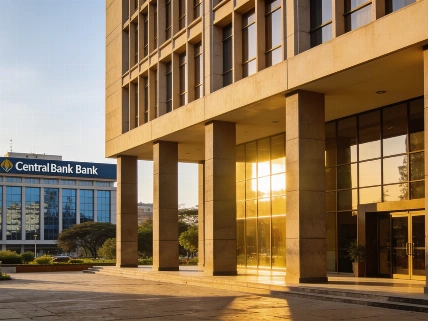
After five decades of restrictions, Ethiopia is preparing to open its banking sector to foreign lenders. Subsidiaries and branches must bring at least 5 billion birr in paid-up capital. The National Bank of Ethiopia set that threshold in 2025 directives implementing the Banking Business Proclamation, passed in December 2024.
Foreign banks can enter through a subsidiary or branch. They may also open a representative office or invest in a local bank. A foreign strategic investor can hold up to 40% of an Ethiopian bank, while total foreign ownership is capped at 49%, BusinessDay reported. Representative offices may handle liaison work and marketing. They can conduct market research, but cannot carry out core banking operations.
Foreign commercial banks have been shut out of Ethiopia since 1975, when the Derg regime nationalised the banks. National Bank Governor Eyob Tekalign says the reform aims to attract capital. He also expects it to sharpen competition and widen access to modern financial services.
For now, the opening is part of a wider effort to attract investment and development finance. Speaking to The Pulse of Africa in Bangkok on the sidelines of the 2026 International Monetary Fund and World Bank Group Annual Meetings, Eyob said Ethiopia is shifting its focus from debt restructuring towards investment.
Debt talks shape the investment push
Ethiopia has finalised agreements with bilateral creditors and is working to complete negotiations with commercial lenders. It has reached an agreement in principle with Eurobond holders to restructure its $1 billion bond, which carried a 6.625% coupon and matured in 2024. In August 2026, the official creditor committee, co-chaired by China and France, said the proposed terms were comparable with those offered to official creditors. Formal approval from bondholders was still required, IFR reported. As negotiations advance, the government is using the summit to seek development financing and partnerships aligned with national priorities.
Ethiopia defaulted on its sole international bond in 2023. In July 2024, the International Monetary Fund approved a financing programme of about $3.4 billion to support economic stabilisation and debt restructuring. The country is conducting its debt negotiations under the G20 Common Structure.
The reform agenda is already putting pressure on households and businesses, as an earlier assessment of reform pressures noted.
Eyob said Ethiopia is sharing its restructuring experience with other developing countries facing fiscal challenges. He described the country’s approach as grounded in Medemer, or combined benefit, and focused on national priorities: “Medemer is something that is excavated from Ethiopian roots, while the starting point is always Ethiopians. We don’t have any other ideology except Ethiopia itself, in a very pragmatic approach to development,” he said.
Foreign banks are in licensing discussions
The National Bank says the reform is intended to strengthen domestic lenders’ capital and operational ability to recover, not displace them. It is prioritising applications from regional and pan-African institutions familiar with local markets. Ethiopia is one of Africa’s largest and least-banked markets. The regulator expects foreign entrants to encourage domestic lenders to reinforce their capital and operations.
Several licensing discussions with regional lenders have advanced significantly, Eyob said. By October 2026, the National Bank was considering formal applications from two foreign banks planning to establish new operations from scratch rather than acquire existing Ethiopian banks. Other international banks were conducting due diligence ahead of possible investments in local lenders.
Expanded competition is expected to take effect this year. The Central Bank also points to rising digital payments and the expansion of artificial intelligence as changes underway in Ethiopia’s financial sector.