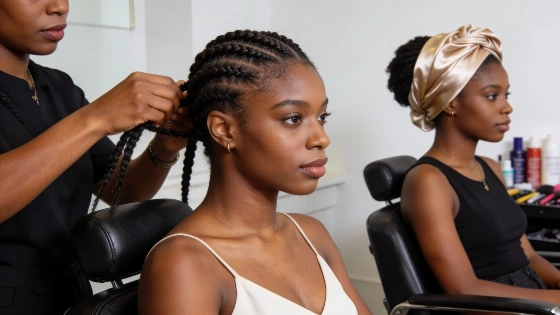
Step into a Nigerian salon in 2026 and you’ll see the price of a hairstyle depends less on the look and more on your city and your wallet. A set of knotless braids that goes for N 12,000 in Ibadan can cost N 45,000 in Lagos. In Abuja, salons are charging up to N 30,000 for a “Lagos Hairline” wig finish. Beauty has turned into a postcode contest, and the numbers don’t lie.
According to the National Bureau of Statistics, Nigeria's annual headline inflation slowed to 15.39% in August 2026, down from 23.14% a year earlier, but this deceleration does not mean prices have fallen.
Price breakdowns and the city premium
Take the basics. Patewo, a classic Yoruba cornrow, costs N 3,000 in both Ibadan and Port Harcourt. In Lagos, the same style jumps to N 8,000, and in Abuja it hits N 10,000. Knotless braids with wavy ends—a style many want for its soft finish—run from N 12,000 in Ibadan to N 45,000 in Lagos. Even simple “All Back” cornrows cost N 8,000 in Ibadan and Port Harcourt, but N 15,000 in Lagos and N 20,000 in Abuja. The pattern is clear: Lagos and Abuja always top the price charts, while Ibadan and Port Harcourt keep things more affordable.
Specialty styles don’t buck the trend. Pearl Cornrows with beads cost N 10,000 in Port Harcourt, N 15,000 in Ibadan and Abuja, and N 20,000 in Lagos. Faux Locs, Goddess Braids, and Shuku all follow the same path. The bigger the city, the higher the price. The “Lagos Hairline” wig finish—a premium install that blends right into the scalp—costs N 25,000 in Lagos and Port Harcourt, but N 30,000 in Abuja. These prices don’t include hair attachments, which can push the total even higher.
Maintenance, lifespan and the economics of style
Getting your hair done is just the start. Each style comes with its own upkeep and shelf life. Patewo can last up to four weeks if you wrap it at night and keep your scalp hydrated. Knotless braids and Dolly Braids can stretch four to six weeks, but only with regular oiling and gentle care. Faux Locs and Goddess Braids can last eight and four weeks, but only if you avoid too much restyling and keep your scalp healthy. The real cost isn’t just what you pay up front—it’s how long you can make the style last before you’re back in the chair.
The Central Bank of Nigeria's September 2026 inflation expectations survey found that 69.5% of respondents perceived inflation as high, up from 64.3% the previous month, and 62.3% of companies reported increased costs due to inflation, highlighting the pressure on service businesses like salons.
What the numbers reveal about Nigeria’s urban divide
The numbers from these four cities tell a blunt story. Lagos and Abuja set the pace for hair prices, while Ibadan and Port Harcourt offer a break for those watching their spending. The reasons are easy to spot: higher rents, bigger demand, and city clients willing to pay for top finishes. The result is a beauty market where access to popular styles depends on where you live and how much you can spend.
For Nigerian women, the price of hair is more than a personal choice. It’s a sign of urban inequality and a test of what you can afford. The sharp differences between cities aren’t just numbers on a wall—they shape daily life for millions. As living costs keep climbing, salon price lists have become a mirror of Nigeria’s wider economic gaps. In 2026, the real cost of hair in Nigeria is about more than style. It’s about your city, your budget, and what you’re willing to pay for the look you want.
Annual inflation rates have slowed, but the National Bureau of Statistics still reported monthly headline inflation at 0.71% in August 2026. Prices are still rising, just not as fast as before. For many Nigerians, the high costs for services like hairdressing remain a heavy load. According to an NBS inflation report, food inflation hit 19.57%, putting even more pressure on household budgets and forcing many to cut back on non-essentials like beauty treatments.
Comparing inflation data before and after 2025 isn’t straightforward. The NBS changed its consumer price index base year from 2009 to 2024 and updated the consumer basket. The International Monetary Fund has warned that this rebasing “mechanically lowered” measured inflation, so year-on-year comparisons around this change need extra care, as explained in an IMF and NBS analysis.