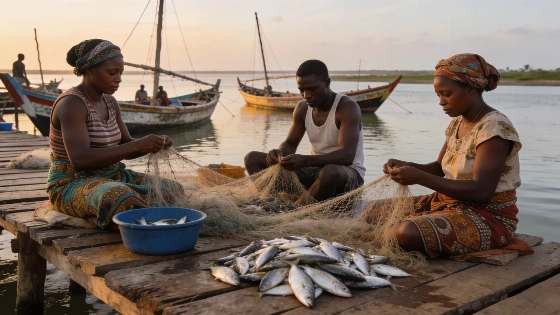
Fish stocks off Nigeria’s coast are shrinking fast. The International Maritime Institute of Nigeria (IMION) says the country is running out of time to save its fisheries and aquaculture. Rear Adm. Thaddeus Udofia (rtd.), IMION’s Director-General, has put forward a five pillar plan to stop the decline and put fisheries back at the heart of the Blue Economy.
According to UN Comtrade data, Nigeria's imports of frozen fish and seafood rose from $606 million in 2023 to $688.5 million in 2024, with further increases recorded in 2025.
Five pillars for sector revival
IMION’s plan targets the main weak spots in the system. The first pillar calls for all maritime security agencies, port regulators, and fisheries departments to work together. Udofia pointed to the Nigerian Navy’s record in fighting piracy and illegal fishing. He says those gains need to carry over into how Nigeria manages its own fisheries.
The second pillar is about using real data to shape policy. IMION wants the Federal Government to boost both the Nigerian Institute for Oceanography and Marine Research (NIOMR) and IMION itself. The goal is to get solid fish stock data to guide decisions. Udofia says catch limits, closed seasons, and marine protected areas should be based on science and enforced without exception. But as a GI Law Journal legal analysis points out, Nigeria still has no official quota system for marine resources and has not set up any marine protected areas. The reasons include a lack of technical know-how and poor coordination between agencies.
The third pillar pushes for a big shift to aquaculture. IMION wants Nigeria to move away from unpredictable wild fishing and invest in modern fish farming. This means rolling out cage culture in coastal lagoons, building up cold chain storage, and upgrading processing to cut post-harvest losses and fight food shortages. Udofia also calls for more training, aiming to turn fishing into a modern business that can create wealth, especially for women and young people.
The Sea Fisheries Act 1992 remains the legal foundation for regulating marine fishing in Nigeria, requiring vessels operating in territorial waters or the exclusive economic zone to be registered and licensed. Violations can result in up to five years imprisonment, fines up to $250,000, and confiscation of vessels and catch.
The fifth pillar hands more power to local communities. IMION wants to make community-based fisheries management the norm and give cooperatives real authority to help protect resources and share in the benefits.
Implications for food security and economic growth
IMION’s plan is about more than just saving fish. The institute says the strategy is key to protecting coastal jobs, tackling food shortages, and growing the Blue Economy. The focus on clear targets and strict follow-through marks a break from empty promises. But whether Nigeria’s institutions can actually deliver remains to be seen.
With marine life under pressure and food insecurity on the rise, IMION’s plan calls time on business as usual in the fisheries sector. The push for data, tough enforcement, and local involvement sets a new bar for reform. If leaders fail to act, Nigeria could lose not just its fisheries, but a crucial source of income and food. The future of the Blue Economy now hangs on how quickly and seriously this plan is put into action.