
On September 23, 2026, the U.S. Trade and Development Agency announced support for INFRAGORA Global Capital’s proposed AI-ready data centres in Nigeria under its AFRIDATA platform. USTDA is funding a feasibility study to assess whether the facilities can support AI workloads and establish technical and financial requirements before construction begins. The agency says this early technical work should help infrastructure projects attract financing and procurement opportunities involving U.S. goods and services, as outlined in its telecommunications programme.
INFRAGORA, a South African infrastructure investment firm, plans to build two data centres in Nigeria at an estimated cost of $650 million to $1 billion. The project remains in assessment and design, with construction targeted to start by the second quarter of 2027. Senior managing director Kiel Odiogo said financial close is expected before construction. TechCabal reported that the facilities are designed to require an initial 80MW to 100MW of power and meet Tier III+/Tier IV reliability standards.
The funding picture remains undisclosed. INFRAGORA has not said how much it has secured or identified the project’s backers, citing confidentiality obligations.
Power and financing shape the project
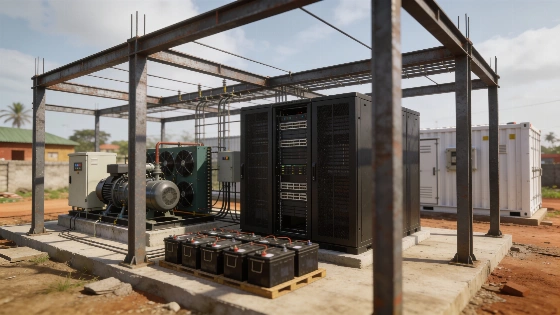
Reliable electricity is a major operating challenge for Nigerian data centres. INFRAGORA proposes a 160MW to 200MW independent power plant alongside the facilities. It plans to source energy through Ocha Energy, its sister platform, and use long-term power purchase agreements to manage costs. The proposed plant would combine gas with renewable generation. Battery storage is also planned.
Odiogo said the company intends to pair independent power deployment with each AFRIDATA project across the continent through Ocha. He described battery storage as the backbone of that approach. The plant is expected to supply the data centres’ initial 80MW to 100MW capacity. Where feasible, INFRAGORA may sell surplus electricity to infrastructure providers, energy merchants or the national grid.
The company has not disclosed the expected electricity tariff, the renewable share of the proposed mix or the plant’s construction schedule. Those details will affect operating costs. The power challenge also features in data-centre power coverage.
USTDA expects its feasibility support to create opportunities for American suppliers of AI software and computing hardware. It also identified networking equipment, cloud infrastructure and cybersecurity solutions as potential areas.
INFRAGORA estimates its wider African platform could require $3 billion to $5 billion. It plans an additional 300MW to 550MW across Ghana, Côte d’Ivoire, Kenya, Tanzania, Angola, South Africa and Egypt. In Nigeria, Kasi Cloud is developing a 100MW Lagos facility with estimated initial capitalisation of $250 million.
Capacity and local control remain open questions
INFRAGORA intends to sell wholesale computing and cloud services, with disaster recovery also planned. Potential customers include Nigerian data centre operators, businesses, government agencies, small enterprises and international cloud providers. The facilities are intended to meet Tier III+/IV standards. Tier III permits maintenance without disrupting operations, while Tier IV provides greater fault tolerance.
TechCabal estimates Nigeria has about 26 operational data centres, or roughly 28 including facilities under construction. It projects national data-centre capacity could reach 210MW to 300MW by 2030. Nigeria does not yet have a full hyperscale cloud region operated by Amazon Web Services, Microsoft Azure, Google Cloud or Oracle; Amazon operates a smaller Local Zone in Lagos. A data centre provides physical infrastructure, while a cloud platform also includes managed computing services, software and geographic redundancy.
The company has not specified GPU capacity, storage or network performance. Those details will help establish whether the facilities can meet AI workloads’ needs, including dependable power and cooling.
Odiogo cited estimates that 55% of African enterprises run at least half their workloads in the cloud. He said firms are adopting a sovereign-first hybrid approach: sensitive information stays in local facilities, while public cloud handles workloads that need flexibility. Local data centres can shorten the distance information travels, potentially improving response times for financial services.
A Basic Bank of Nigeria data-localisation requirement for related to the topic payment data is scheduled to take effect on January 1, 2027, putting pressure on banks, fintech companies and other regulated financial institutions to host that data locally. The deadline falls before INFRAGORA’s planned construction start. Ugi Augustine, founder of Nugi Technologies, told Punch that Nigeria has about 28 data centres, operational or under construction, across six states, and warned that capacity and power reliability are constraints ahead of the deadline. The proposed AFRIDATA facilities have not been identified as a contracted solution for the requirement. Augustine’s comments were reported in Punch’s coverage of the CBN deadline.
INFRAGORA says African and institutional investors will retain ownership and control, and that the facilities will comply with applicable data protection laws and government regulations. The project will use American technology. Its implications for reliance on foreign providers will depend partly on the equipment and software selected, data access arrangements and local business capabilities.
The company also plans an information and communications technology business park and the AFRIDATA Academy. Training will cover AI and machine learning, with information security as another focus. The proposed academy would include an new idea hub for startups and target government employees, businesses, small and medium-sized enterprises and young entrepreneurs.
INFRAGORA expects the platform to generate tens of thousands of direct and indirect jobs, particularly for young people and women. It also plans an new idea fund for startups developing AI applications in agriculture, healthcare, energy and financial services. In Nigeria, the company says it is working with Lagos Business School on the continental rollout and has a partnership with the Massachusetts Institute of Technology.
Construction is planned to begin by the second quarter of 2027, with financial close expected before work starts.








