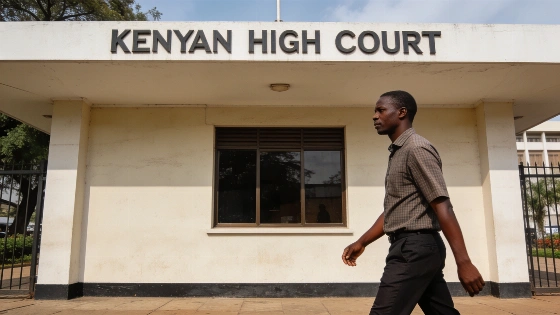
The $1.9 billion Vodacom paid for a proposed Safaricom stake remains frozen in the Kenyan government’s account. On 13 October 2026, the Court of Appeal in Nairobi considered Vodacom’s request to suspend the High Court ruling. Rather than decide the stay application separately, it directed that the substantive appeal be fast-tracked. The court’s order keeps the existing position on the shares and purchase consideration in place while the appeal is heard, as set out in Vodacom’s market update.
The appeal follows a 15 September ruling that the government’s sale of a 15% stake in Safaricom to Vodacom was unconstitutional, null and void. The High Court ordered the return to the state of 6,009,814,200 ordinary shares. Justices Francis Gikonyo, Roselyn Aburili and Tabitha Ouya found that the National Treasury had failed to ensure adequate public participation and disclosure. They also found it used an arbitrary valuation method and did not fully assess the competition implications. The appeal does not itself overturn those findings; the Court of Appeal’s substantive decision remains pending. TechCentral’s report on the appeal detailed the High Court ruling.
Vodacom and other affected parties filed notices of appeal after the judgment. The appellate court’s order means Vodafone Kenya remains the registered holder of the shares bought from the government on 30 June 2026. The corresponding purchase consideration is to be preserved pending the appeal.
The stakes in the proposed transaction
Vodacom’s offer covered the government of Kenya’s 15% stake. The state’s 6,009,814,200 shares were acquired for KSh204.3 billion, at KSh34 a share. Together with an effective 5% stake acquired at the same time from Vodafone International Holdings through Vodafone Kenya Limited, the transaction represented an effective 20% interest in Safaricom and was intended to give Vodacom control of the company. The combined deal was valued at about $1.9 billion, or R31.28 billion; the government’s portion was reported at roughly $1.6 billion. The court challenge centres on the government sale, not the separate 5% holding.
Safaricom controls 70% of Kenya’s market and is the only private licence holder in Ethiopia. Ethiopia has 120 million potential consumers and is moving away from a state-monopoly telecoms system. It is regarded as “the last frontier” in African telecommunications.
The deal would strengthen Vodacom’s position in a contest with MTN. MTN operates in 16 African countries, while Vodacom is active in major markets including Egypt and Kenya, as well as Ethiopia. Nigeria remains MTN’s standout market. If the transaction is approved, Safaricom would join Vodacom’s consolidated balance sheet, putting it ahead of MTN in revenue and market capitalisation. That comparison comes amid shifting African corporate rankings, covered in an earlier market-cap analysis.
M-Pesa and the legal challenge
Safaricom’s commercial weight is tied in part to M-Pesa. The mobile money service launched in 2007 and is widely recognised as a global pioneer in financial inclusion. Before its launch, 80% of Kenyans were unbanked, relying on physical cash or costly, slow courier services to send money to relatives in rural areas.
M-Pesa now handles more than 37 billion transactions a year, worth $300 billion in 2025, roughly twice Kenya’s GDP by value. Vodacom has co-owned the service since 2020. Its reach fits Vodacom’s “Vision 2030” aim to move “beyond mobile” into higher-margin financial services. The company reported R16.8 billion in fintech revenue in its last financial year, up 20% on the previous year. Its planned offerings include micro-insurance and invoice financing, as well as digital point-of-sale infrastructure and wealth management.
The challenge was brought by local academic Professor Fredrick Onyango Ogola and political activist Tony Gachoka. Their petition argues that public participation and scrutiny requirements were bypassed. They also challenge the valuation framework as arbitrary and say the sale would deny Kenyans future gains from the government’s stake. The High Court’s ruling cited inadequate public participation and disclosure, arbitrary valuation and the absence of a full competition assessment. In its account of the appeal proceedings, Business Day reported that the appellate process will determine whether the sale can stand.
A refund ordered by the High Court could disrupt public-finance planning and put pressure on the stability of the Kenyan shilling.