Telkom's enterprise value is approximately 38 billion rand ($2.2 billion), putting the scale of MTN Group's renewed approach to its South African rival in perspective. On November 16, MTN said the acquisition discussions were at an early stage, reviving negotiations that ended in 2022 after the companies disagreed over exclusivity arrangements, as Reuters reported.
MTN is considering a cash offer, with Telkom shareholders potentially able to choose MTN shares instead. Telkom has a market capitalisation of about 32 billion rand and net debt of 6.4 billion rand, compared with MTN's market value of roughly 432 billion rand. No price or exchange ratio had been agreed, and MTN said there was no certainty the talks would lead to a deal. Telkom's fixed-line and fibre assets, along with its enterprise business, could join MTN's larger mobile operation and subscriber base, strengthening MTN's position against Vodacom in South Africa. Any binding transaction would face regulatory scrutiny. In a separate South African network development, Vodacom's 5G upgrade combines channels for customers with compatible devices.
Outage restored in Japan
NTT Docomo restored its 5G Standalone service after a nationwide disruption on November 16 that affected voice calls and data access for around six hours. The outage ran from approximately 10:02 a.m. to 3:58 p.m. Japan time. Text messaging was also reported as unstable. Emergency calls were unaffected, according to Japan Today's account.
Docomo attributed the incident to concentrated communications on switching equipment that processes signals from base stations, preventing normal processing. The company said it found no evidence of unauthorised access or a cyberattack and was examining whether the latest disruption was connected to earlier incidents in November. A separate outage on November 5 reportedly continued for about 14 hours into November 6 and affected approximately 1.5 million customers.
Private network supports power distribution
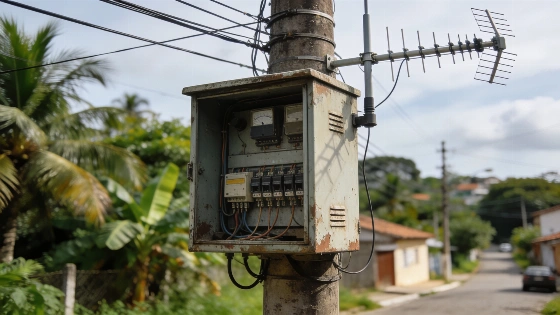
Cemig and Huawei announced on November 13 that they had deployed a commercial 450 MHz private wireless network for electricity-distribution communications in Brazil. The companies described it as the first commercial 450 MHz private wireless network for the power sector in Latin America. Field tests recorded distribution-terminal connectivity of 99 percent and communication reliability of 99.99 percent, according to the Cemig and Huawei announcement.
Cemig had relied on leased public mobile networks. It reported that terminal connectivity on those networks fell from 90 percent to about 60 percent during the rainy season, citing coverage gaps and infrastructure outages. The private network enables remote control of distribution equipment and is intended to support future smart-meter applications. The companies also identified distributed solar and microgrids as potential uses. Cemig said it conducted multiple rounds of technical evaluation and reviewed global use cases before selecting Huawei as its deployment partner.
The lower-frequency 450 MHz band supports wide-area utility communications. Cemig and Huawei said the private network was designed to address connectivity needs for electricity-distribution terminals. They did not disclose the contract value or number of base stations. The coverage area was also not disclosed.