
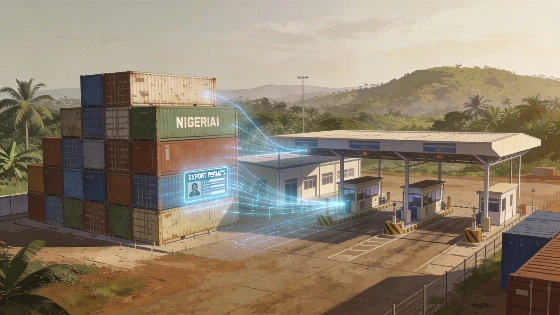
Nigeria shipped 8.02 million metric tonnes of non-oil products to 120 countries in 2025, according to the Nigerian Export Promotion Council (NEPC).
Non-oil export earnings increased by 11.5 per cent to $6.1 billion in 2025, up from $5.46 billion in 2024. Separately, the Nigerian Ports Authority (NPA) previously reported a 25 per cent increase in overall exports over a two-year period.
Export permits move onto a shared platform
The National Single Window (NSW) is a Federal Government initiative intended to simplify international trade through a unified digital platform for documentation, permits and approvals. Project Director Tola Fakolade said the second phase was scheduled to begin on Dec. 14, aiming to reduce delays and revenue leakages.
The first batch will cover export permits issued by the Standards Organisation of Nigeria (SON) and NAFDAC. The Federal Produce Inspection Service is also included. A second batch for processes handled by the Central Bank of Nigeria (CBN) is scheduled to begin in the first quarter of 2027.
During the first phase, the NSW integrated regulatory agencies' digital systems for licence and permit submissions. Fakolade said the platform also checks that users meet regulatory requirements before they access relevant services. Agencies said the measure helped improve compliance and reduce revenue leakages.
For NAFDAC-regulated exports, including food, drugs, cosmetics, chemicals, detergents, medical devices and packaged water, product registration remains a prerequisite. NAFDAC Director-General Prof. Mojisola Christianah Adeyeye said only registered regulated products are approved for export. For product registration, NAFDAC uses its NAPAMS platform to allow applicants to submit and track applications.
Depending on the product and destination, NAFDAC issues export certificates, health certificates, certificates of pharmaceutical products and certificates of free sale, which importing countries increasingly require. Testing can include mycotoxin, pesticide-residue and heavy-metals analysis, including for exporters targeting markets such as the European Union. NAFDAC also offers technical assistance and free or highly subsidised laboratory testing for registered and cooperative exporters. Adeyeye outlined these requirements at the SMEDAN-NAFDAC Summit in Lagos on Nov. 9, 2026, in an address on export requirements.
Coordination and exporter onboarding
NEPC Executive Director Nonye Ayeni, represented at the Port Harcourt engagement by Trade Information Director Ndubueze Okeke, said the council was working to integrate relevant export services into the platform. NEPC maintains a database of registered exporters, which the NSW team expects to use as implementation proceeds.
Ayeni said exporters needed to understand how the NSW connects with the Trade Monitoring System (TRMS), Forms NXP and NCX, alongside applicable registration, permit and certification requirements.
NAFDAC said it collaborates with sister agencies on export requirements and participates in the AfCFTA National Approval Committee and the Export Trade Liberalization Scheme. These arrangements sit alongside product-specific registration and certification requirements that exporters must meet for their destination markets.
Nigeria Customs Service Controller for Modernisation Aondona Fanyam said the NSW had been tested through import processes and was now being extended to exports in stages. He said agencies were ready, while exporters needed awareness and training on the changes.








