
Crude oil accounted for more than 90 per cent of Nigeria's exports to Poland in 2025, leaving bilateral trade heavily dependent on one commodity. Finance Minister Taiwo Oyedele says Nigeria wants to broaden that relationship with a pipeline of projects valued at about $78.5 billion.
The 65 projects are projected to create 366,000 jobs. Their feasibility studies have been completed, according to Oyedele, who is seeking private capital and technical expertise from Polish investors.
Projects and port modernisation
Oyedele outlined the investment appeal at the second Polish-Nigerian Economic Forum at the Lagos Continental Hotel. The Federal Ministry of Finance reported his remarks in a statement the following day.
The portfolio includes infrastructure and manufacturing projects, with energy also covered. Oyedele said the government wants to shift the economy away from reliance on raw material exports towards industrial partnerships that increase local production.
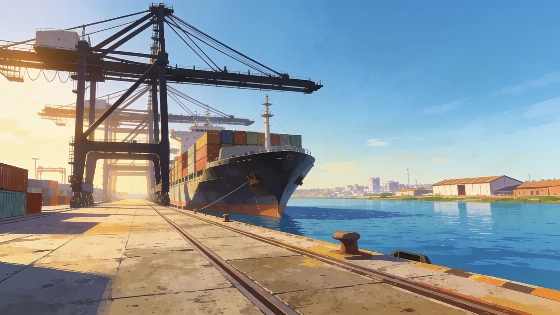
He cited the planned modernisation of the Lagos Port Complex at Apapa and Tin Can Island as an example of bilateral cooperation, saying the work is supported by Polish financing. The projects' feasibility studies are complete, but the source does not say that the wider pipeline has secured investment or moved into construction. Exporters and maritime professionals have also called for improved port operations to strengthen Nigeria's export sector and sustain the competitiveness of its products in international markets, according to Voice of Nigeria.
The forum's infrastructure focus is part of a wider regional conversation about connectivity, including The Africans Time's report on cross-border fibre.
Trade remains concentrated in crude
Ministry figures cited in the statement put Polish exports to Nigeria at roughly $169 million in 2025. Nigeria's exports to Poland were about $565 million, with crude oil making up more than 90 per cent of that total. Bilateral trade was approximately $734 million.
The concentration reflects a wider pattern in Nigeria's export economy. National Bureau of Statistics tables recorded crude petroleum exports of ₦2.425 trillion, or 81.02 per cent of total exports, in the third quarter of 2020, as shown in the NBS foreign-trade tables.
In its October 2025 Economic Report, the Central Bank of Nigeria recorded US$4.36 billion in receipts from crude oil, gas and refined petroleum-product exports, up 8.46 per cent from September. Crude-oil receipts were US$2.82 billion, while refined petroleum-product exports generated US$0.77 billion. The CBN attributed the monthly increase to higher domestic crude production, stronger seasonal gas demand and improved domestic refining activity, according to its October economic report.
Oyedele said that level remained below the potential of the two economies. He proposed expanding commerce into processed agricultural goods and fertilisers, alongside sesame and industrial machinery. Technology and services were also identified as areas for growth.
He urged Nigerian businesses to export finished goods and draw on Polish engineering expertise and industrial equipment to strengthen domestic manufacturing. He also said both countries could use fiscal instruments and development finance to support job creation and higher household earnings.
Nigeria and Poland formalised commercial relations through a 1962 trade agreement. Their ties became a strategic partnership in 2013, and a Polish Foreign Trade Office opened in Lagos in 2018. Oyedele cited Poland's growth from an economy of about $67 billion in 1989 to more than $1 trillion in 2025 as a benchmark for Nigeria's structural reforms.








