
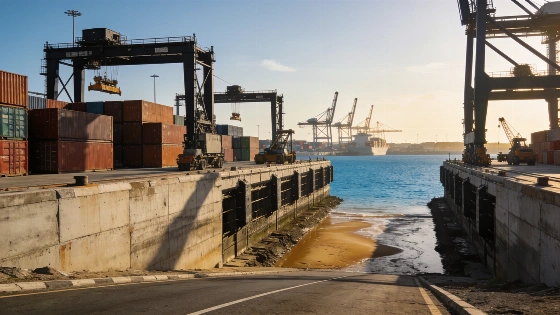
Cargo at Nigerian ports has typically spent 10 to 18 days in port, compared with three to five days at leading international ports, according to Marine and Blue Economy Minister Adegboyega Oyetola. The ministry estimates that congestion, demurrage, storage charges and wider logistics inefficiencies cost the economy up to $4 billion a year. The government has also set a target of cutting cargo clearance time to 48 hours, as BusinessDay reported.
The Federal Government began the £746 million programme, valued at about ₦1.45 trillion, on 25 November 2026, with a ceremony at Tin Can Island Port. The Apapa and Tin Can Island upgrade aims to improve cargo movement and lower the cost of doing business. It is expected to create at least 20,000 direct and indirect jobs. The financing deal was signed about eight months before the groundbreaking. The ceremony came after two previously announced start dates were missed.
Capacity pressures at Lagos ports
Oyetola flagged off the project on Wednesday at Tin Can Island Port. Finance Minister and Coordinating Minister of the Economy Taiwo Oyedele attended, alongside other officials. Oyetola's media aide, Dr Bolaji Akinola, announced the start in a statement. Oyetola said Nigeria could not meet the demands of modern shipping with infrastructure that had fallen behind.
Apapa dates to 1913; Tin Can Island opened in 1977, when Nigeria had about 67 million people and cargo throughput was about 8 million tonnes. Oyetola said Nigeria's population is now about 240 million, annual trade exceeds $100 billion and port cargo volumes are approximately 129 million tonnes. Tin Can Island's vessel calls fell 3.4% to 488, while vessel turnaround time rose to 5.1 days from 4.4 days, according to BusinessDay.
The government says it wants to attract more direct calls from international shipping lines and keep Nigeria-bound cargo in the country rather than routing it through competing regional hubs. It also wants to develop transhipment capacity and position the ports as a trade gateway under the African Continental Free Trade Area. The modernisation programme is meant to address infrastructure and operating constraints affecting berths, channels, roads, equipment and port systems.
Works and project oversight
The upgrade will repair quay walls and berths. Navigation channels are to be dredged, while access facilities will be improved. The plan also includes upgraded cargo-handling equipment and modernised operational systems. At Apapa, the rehabilitation scope covers 11 berths and about 2 kilometres of quay wall, including work on bollards, fenders, safety landers, apron slabs and a rail foundation for ship-to-shore gantry cranes, according to the ITB-HITECH project presentation.
An inter-ministerial committee involving the Ministry of Marine and Blue Economy, the Nigerian Ports Authority and the Nigerian Ports Economic Regulatory Agency will oversee measures to limit disruption during construction. Vessel scheduling will be coordinated, and plans will cover cargo movement and alternative routes.
Oyedele described the financing as Nigeria's largest sovereign export credit deal since 2009. He said it is the first project in the country backed by Poland's export credit agency KUKE, and presented the arrangement as a sign of international confidence in the government's economic reforms.
Nigerian Ports Authority Managing Director Dr Abubakar Dantsoho said the NPA will monitor compliance with approved designs, engineering standards and timelines while the ports remain in operation. An earlier report on project delays said physical reconstruction had yet to begin. The flag-off announcement does not specify whether construction crews have started work.
Poland's Deputy Foreign Minister Marcin Bosacki attended the ceremony. The Polish ambassador was also present, as was British Deputy High Commissioner in Lagos Jonny Baxter.








