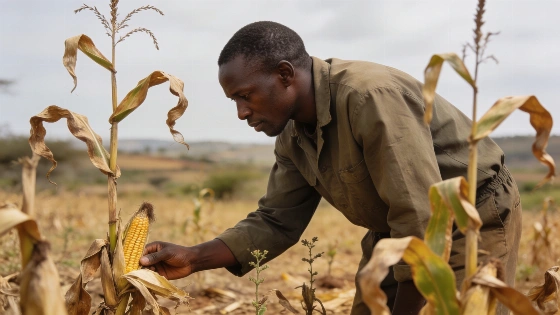
John Kemboi cut down his struggling maize crop before harvest and turned it into livestock feed after deciding the yield would not cover production costs. He has since started ploughing his five-acre farm for the next planting season.
Kemboi's usual harvest is about 200 bags of maize, each weighing 90 kilogrammes. This season, prolonged dry spells damaged the crop before it could reach that level. FEWS NET reported that June-September rainfall across affected in-season cropping areas was generally 45-90 per cent of the 1991-2020 average, with deficits during key crop-development stages in Uasin Gishu, Trans Nzoia and Nakuru. Its preliminary assessment put Kenya's national maize yield deficit at about 28 per cent, with losses of up to 43 per cent in high-potential production counties, FEWS NET reported.
Production costs across the North Rift range from Ksh30,000 to Ksh50,000 per acre, rising to about Ksh70,000 for farmers leasing land. The exposure differs from the currency-payment restrictions affecting Russian exporters in an earlier report; here, uncertain rainfall is shaping whether growers risk further spending on planting.
Forecast offers a narrow window
Kenya Meteorological Department (Kenya Met) forecasts above-average rainfall in Uasin Gishu and Trans Nzoia for November 2026 to January 2027. Its October 30 outlook says wetter conditions could restore soil moisture and support farming, though the timing and distribution of rain will matter to growers whose crops are already damaged. FEWS NET also reported an uneven start to the September-December rainy season across East Africa, despite forecasts for above-average seasonal rainfall.
The forecast brings risks alongside the prospect of improved growing conditions. Kenya Met warns that heavier-than-normal rainfall could cause waterlogging, flooding and soil erosion, while increasing crop pests and diseases.
Replanting adds to farmers' exposure
At Chesagem village in Kesses, Uasin Gishu County, Dan Kantuum says his three-acre farm would ordinarily produce about 70 bags, each weighing 90 kilograms. His harvest has fallen well short after unfavourable rainfall disrupted crop development. He has lost money on land preparation, seed and fertiliser.
Neighbouring grower Michel Kwani replanted after his first crop failed. Rainfall then disappeared, leaving the second crop with stunted growth. Kwani says he accepted the possibility of a loss when he chose to plant again. Farmers who replanted in September and October were responding to forecasts of heavy El Niño rains, but the region did not receive sustained moisture.
The Ministry of Agriculture projected a 40 per cent crop failure in the North Rift, according to a Nation report. The government reduced fertiliser prices from Ksh2,500 to Ksh2,000 and cut maize-seed costs by half to encourage planting and replanting. Authorities also advised farmers to turn damaged maize into silage and diversify into alternative food crops.
Some growers have stopped planting for the season, while others are waiting to see whether forecast rain can help their replanted maize. The forecast covers November 2026 through January 2027; it does not guarantee damaged crops will recover.