
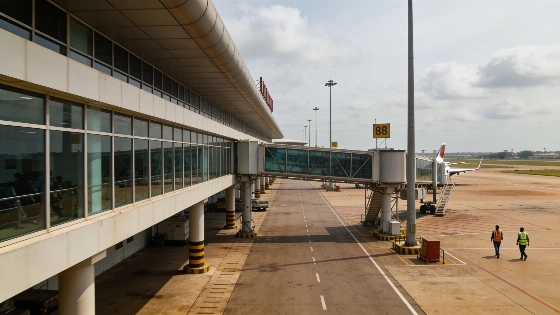
Profits from Nigeria's major airport gateways are being used to keep other airports running, according to Aviation and Aerospace Development Minister Festus Keyamo. He said the cross-subsidy helps explain why the Federal Government is seeking greater private-sector participation in airport management and development. Keyamo said private operators could bring in capital and improve airport operations, while taking on more responsibility for development and commercial activities.
The Federal Government signed a 30-year concession agreement for the Jeremiah Obafemi Awolowo International Airport in Port Harcourt, Rivers State, on 12 November 2026. The agreement covers the airport's management and development and names Port Harcourt Airport Company Limited as the operator; the project is associated with R28 Holdings. The signing followed the government's earlier concession programme for Akanu Ibiam International Airport in Enugu, which had begun about five months earlier. The News Agency of Nigeria reported that the concessionaire pledged to retain current airport workers and create additional employment opportunities. Keyamo said workers would retain their existing conditions of service under the arrangement.
Funding limits and operating costs
Keyamo said some airports were operating at a loss while revenue from major gateways helped sustain them. Running an airport requires spending on staff and diesel generators, he said, while government funding constraints limit the scope for expansion and modernization. He also pointed to the commercial potential of non-aeronautical facilities and activities beyond core flight operations.
The minister said the government's funding limits made private participation necessary to help operate some airports. The Port Harcourt agreement is a concession, not an outright sale, and forms part of a wider effort to attract investment and reduce reliance on profits from major gateways to support loss-making facilities. Vanguard reported that the concessionaire is to undergo performance reviews every five years.
The financing question extends beyond airports: a report on Nigerian port expansion noted that property-market gains depend on trade growth and infrastructure delivery.
Worker assurances and concession plans
Keyamo said the government had consulted aviation labour unions before signing, following the approach used for the Enugu Airport concession. The agreement was signed in Abuja after discussions with union representatives. Keyamo said the engagement was intended to head off protests and that workers' conditions of service would remain unchanged. R28 Holdings Group Executive Eyo Asuquo also assured existing airport workers that the concession would not lead to job losses.
Asuquo said the concessionaire aimed to upgrade airport facilities to standards comparable with those in Europe and the United States. He said the project was intended to create value for the host community and airport staff, with government and investors also included.
Asuquo said the long-term ambition was to make Port Harcourt International Airport a hub for the Gulf of Guinea, citing activity in the region and the airport's position.








