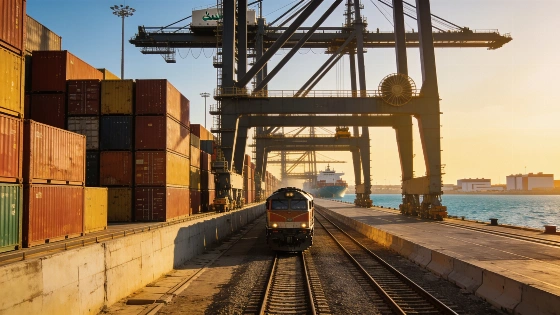
Maersk's logistics zone at Jeddah Islamic Port has reached full capacity, and the company is seeking further investment opportunities in the Kingdom. Al-Jasser called it Maersk's largest logistics zone worldwide. The facility sits within a port that has 17 integrated logistics zones.
Transport and Logistics Minister Saleh Al-Jasser said new investment commitments in the sector had reached SR45 billion (approximately US$12 billion) by 25 November 2026, when he spoke at the Budget 2027 Forum in Riyadh. Saudi Arabia's Ministry of Finance summarised his remarks, while the Saudi Press Agency described the figure as expected 2026 commitments. Al-Jasser said the sector had surpassed several Saudi Vision 2030 targets ahead of schedule, despite regional challenges. The figure refers to investment commitments recorded during 2026.
Port capacity and private investment
Al-Jasser identified private companies as the main investment driver under the National Transport and Logistics Strategy. He said the Kingdom had attracted hundreds of billions of riyals in investment from major international companies. At Jeddah Islamic Port, multibillion-riyal agreements signed with CMA CGM during 2026 cover development of a terminal. Contracts were also signed for five new logistics zones, adding to the port's existing 17. The Saudi Press Agency reported the port investments as part of the minister's Budget Forum remarks.
The port's expansion is part of a wider focus on maritime administration and port operations, including an earlier Saudi port agreement.
Rail links and workforce targets
Rail investment includes the procurement of 20 trainsets for the Haramain High-Speed Railway. New rolling stock is also planned for the Eastern and Northern lines. The mining railway is also due to get new trains. Contracts have been signed to double-track the mining line, which carries three types of minerals.
A proposed Riyadh link between the Kingdom's railway networks had reached its final tendering stage when Al-Jasser spoke. Work on the Landbridge project was continuing with government resources and private-sector cooperation. The planned network would connect the Eastern and Northern rail systems to the central corridor, linking ports by rail. Double-tracking the mining line supports mineral exports now transported by truck.
Women account for 33% of the sector's workforce, Al-Jasser said, while Saudization in leadership and highly skilled roles stands at approximately two-thirds. He attributed the figures to specialised academies offering internationally recognised training programmes aligned with private-sector employment needs. The leadership figure marks a change in a sector that historically relied on expatriate technical staff.