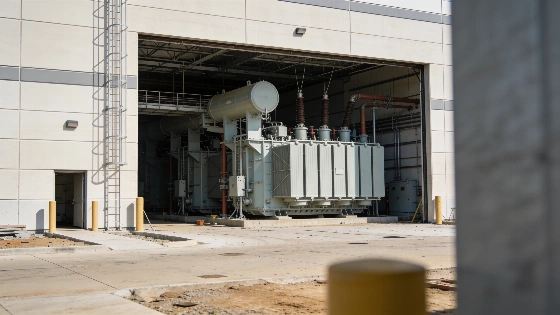
A revised procurement plan for power-generation equipment for US AI data centres left SoftBank with a ¥597.2bn ($3.73bn) loss, including ¥457bn in non-refundable advance payments. The charge formed part of a ¥1.115tn ($7.06bn) net loss attributable to owners of the parent reported on November 10 for the July to September quarter, reversing a ¥2.5tn profit in the same quarter a year earlier. At its November 9 earnings briefing, SoftBank said it had made advance equipment purchases to secure supply amid expected shortages and long lead times; project requirements later changed. The company's Q2 FY2026 briefing materials set out the results for the six months ended September 30.
The July to September result fell below the range of forecasts from analysts polled by LSEG, which ran from a ¥233bn profit to a ¥113bn loss. The earlier quarter had benefited from a large gain on SoftBank's OpenAI investment. The latest reversal reflected costs and weaker investment gains; it did not signal a collapse in OpenAI's valuation. CNBC reported that investment losses and special charges tied to US data-centre projects contributed to the result.
Equipment changes and financing costs weigh on results
SoftBank said a subsidiary changed its orders as project requirements evolved, including for a data-centre project in Ohio. The charge also included ¥140.2bn related to contract changes and settlements. Cumulative payments for the equipment had reached $9.48bn by the end of September. SoftBank said it could eventually receive up to $2.1bn in rebates on future purchases, but those benefits were contingent, and the group recognised no asset for them in the quarter. The Ohio plans include the PORTS-Pike Technology Campus in Pike County, described as having 8.0 gigawatts of IT capacity and a 20-year lease agreement with OpenAI signed in August 2026.
Financing costs for the six months ended September rose to ¥790.7bn from ¥340bn a year earlier. Derivatives recorded a ¥433.3bn loss, compared with a ¥208.1bn gain in the prior-year period. Investment gains fell 56% to ¥1.73tn, despite a substantial gain on Intel shares. Financing costs in the July to September quarter alone were reported at ¥462bn, more than double the year-earlier level.
Before the results, Johan Shamshad wrote on Investing.com: "The market is not saying SoftBank's AI investments are worthless." His concern was the growing risk premium attached to financing them.
OpenAI's valuation does not provide cash for debt
By the end of September, SoftBank had invested $54.6bn in OpenAI and valued its holding at $99.6bn, implying roughly $45bn in cumulative investment gains. The group said the valuation was unchanged from March. It invested another $10bn on 1 October, bringing its total investment to $64.6bn for an approximately 13% stake.
Those valuations do not automatically generate cash to service borrowing. At the end of June, net interest-bearing debt was ¥10.8tn, up from ¥6.6tn a year earlier. SoftBank issued dollar bonds in September with yields of up to 9.75%. Falling values for holdings such as Arm could also limit borrowing against assets. Junji Sakurada of Marina Bay Capital Advisors warned Bloomberg before the results that worsening credit conditions could disrupt planned fundraising.
Investment plans face further constraints
SoftBank shares fell nearly 11% on the Friday before the results and another 4.2% on Monday, amid a broader retreat from AI-linked stocks. Potential US restrictions on new data centres added uncertainty over when projects could proceed. The company also faced complications after Chinese authorities blocked its proposed $5.4bn purchase of ABB's robotics business in its existing form.
"SoftBank may find itself in a position where they have to stop investing," Rolf Bulk of Futurum Group told Reuters before Tuesday's results. He said reducing debt or selling holdings might eventually become necessary. SoftBank has valuable positions across AI and related sectors, and a history of raising cash through asset sales.