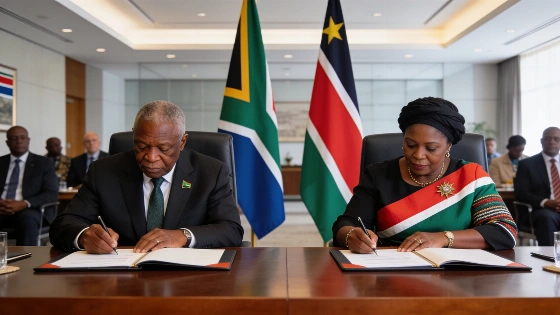
Economic cooperation took centre stage in Pretoria, where South Africa and Namibia signed seven new agreements.
Presidents Cyril Ramaphosa and Netumbo Nandi-Ndaitwah led the Fourth Session of the South Africa-Namibia Bi-National Commission. The accords cover jobs, public administration, air services, legal matters, correctional services, economic partnership and gender equality. Both sides want tangible results for their economies and people.
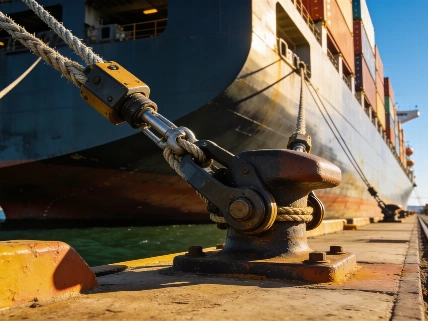
In September 2026, South Africa and Namibia conducted their first joint maritime patrol targeting illegal, unreported and unregulated fishing, opening a new phase in fisheries cooperation.
Strategic focus on industrialisation and cross-border value chains
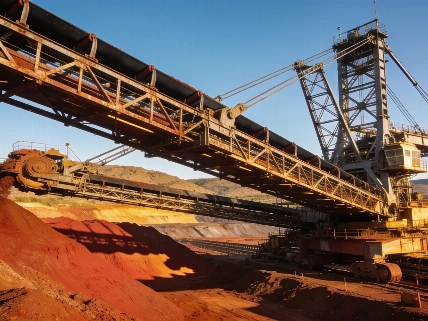
The partnership is now focused on economic action. Both leaders agreed to pursue more trade and investment, stronger cross-border value chains and more private-sector deals. The joint communiqué outlined plans for industrial growth and local processing, especially in mining, oil and gas, with a focus on exploration, research, technology, skills and adding value at home.
Energy security is a priority. Both countries committed to accelerating the Kudu Gas Power Project and plan to work more closely on electricity, transmission and renewables. The two governments also backed the Trans-Kalahari Corridor and other basic trade routes across Southern Africa.
Institutional mechanisms and accountability
Established in 2013, the Bi-National Commission is now the basic mechanism for managing the neighbours’ political, economic, social and security ties. There are already 75 agreements and memoranda in place. At the latest session, the focus was on implementation: ministries and agencies must draw up clear plans, while senior officials track progress and use a Mid-Term Review to keep work on course and address problems quickly. The Namibian reported that a 25-day joint patrol in 2026 uncovered 12 suspected violations and led to the seizure of approximately 32 tonnes of fish.
The new agreements reach beyond business to cover public health, water, farming, food security, skills and a stronger public sector. The leaders also backed regional and continental plans, including the SADC Regional Indicative Strategic Development Plan 2020-2030, the African Union's Agenda 2063 and the African Continental Free Trade Area.
Business impact and regional integration
South African companies invested more than US$1.2 billion in Namibia from 2023 to 2025, creating nearly 4,900 jobs in mining, banking, insurance, property and renewables. Both presidents praised the South Africa-Namibia Business Forum as a basic public-private partnership that is set to lead closer economic and industrial ties. The focus is regional industrial growth and sustainable progress.
Namibia is backing South Africa as host of the 46th Ordinary SADC Summit in August 2026. The two presidents also pointed to their historic ties, forged in the fight against colonialism and apartheid, and agreed to work more closely in SADC, the African Union and other forums to advance peace, security and sustainable growth.
The Fourth Session is over; implementation is now the challenge. The scale of current investment and the scope of the new agreements reflect South Africa and Namibia’s ambition to deepen regional industrial growth and integration. Their impact will depend on follow-through.