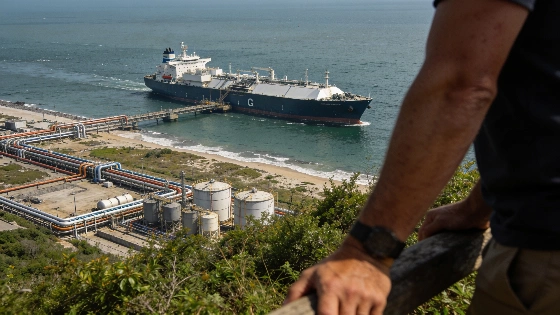
On October 13, 2026, Finance Minister Khamis Mussa Omar told Reuters that talks on Tanzania’s proposed USD 42 billion liquefied natural gas project were nearing completion. The government is seeking private investment as external development assistance shrinks. Negotiations remain open, and the project has not been finalised. Officials had aimed to sign agreements before June 2026, but that deadline passed without a deal.
Omar said the agreement was “almost there”. Commercial and tax negotiations are largely complete, but final legal documents still need government approval. A framework Host Government Agreement with Equinor and Shell was signed in June 2022. Authorities had also proposed changes to a financial agreement concluded in 2023, a complication reported by bne IntelliNews. Tanzania expects agreements on several major investments in the coming months. The LNG partners must still secure the remaining approvals before making a final investment decision, and they have yet to line up financing or set a construction timetable, according to bne IntelliNews.
A major export project with domestic power ambitions
Norway’s Equinor and Britain’s Shell lead the proposed development. ExxonMobil and Pavilion Energy are also partners. Medco Energi is involved, along with state-owned Tanzania Petroleum Development Corporation, or TPDC. The project would draw on Tanzania’s estimated 47.13 trillion cubic feet of offshore natural gas resources. Equinor and Shell did not respond to Reuters’ requests for comment.
Most of the gas is expected to go to export markets, with a portion reserved for domestic use. That supply could support electricity generation and industrial production, part of the government’s ambition to make Tanzania a regional energy hub. The planned facilities are part of a longer effort to develop offshore gas fields and liquefy the gas for export. Published reporting does not specify the domestic allocation or LNG production capacity. It also gives no long-term contract price or date for first deliveries.
The project remains under negotiation. It is not yet producing gas, electricity or export revenue. Final agreements and government approval are still pending, along with a final investment decision. Financing and a construction schedule have not been confirmed, according to Reuters reporting.
Power targets meet a changing financing landscape
Tanzania aims to raise installed electricity generation capacity to approximately 8,000 megawatts by 2030, roughly double current levels. It also plans for sources it classifies as clean to provide around 75% of energy. Those sources include hydropower and solar. Wind and natural gas also count. Meeting the targets will require investment in power generation, with transmission and distribution infrastructure to carry the electricity. The LNG project is not yet supplying gas or power, and the targets depend on several infrastructure programmes.
Uganda plans to begin its first oil exports through Tanzania’s port of Tanga in early 2027, adding a regional petroleum-trade role for the country’s infrastructure.
Domestic revenue now carries greater weight in public finances. Omar said it funds about two-thirds of Tanzania’s budget, which stands at around 62.3 trillion Tanzanian shillings, or approximately USD 23.7 billion. Official development assistance previously covered about 40% of the budget. Omar described its current contribution as “very, very negligible”.
Tanzania is also pursuing agreements for two critical mineral projects. Omar said international investors, particularly from the United States, were showing interest in energy and minerals, but gave no further details. The government says it wants private capital for commercially viable projects that can generate revenue and increasingly finance their own operations.
The government is working to widen access to international capital markets, but has not decided whether to issue an international bond. In July, it expanded foreign access to government bonds. A sovereign yield curve followed in August. Tanzania has also introduced measures intended to encourage corporate debt issuance. Separate market activity in the region is covered in this regional markets report.
Tanzania is assessing the risks of greater foreign participation. Its central bank is studying other African countries’ experience with international investors in local-currency debt. The government is also considering a new IMF lending arrangement, with a decision expected by June. Its previous USD 1.7 billion programme ended in July. That programme included an Extended Credit Facility and a climate-focused Resilience and Sustainability Facility.