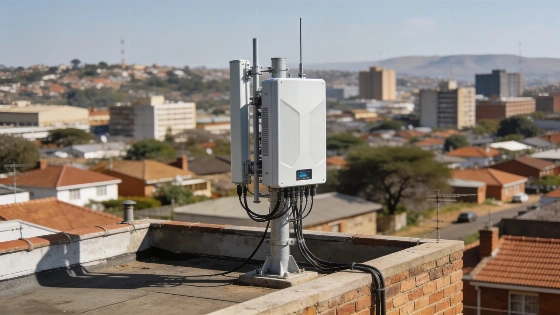
The test ran on 400 MHz of Upper 6 GHz spectrum under a temporary licence at MTN’s Randburg headquarters. MTN Group and Huawei recorded a peak speed of 10.35 Gbps.
MTN called it Africa’s first Upper 6 GHz 5G-Advanced trial. The setup paired a dedicated 5G Standalone core with ultra-wideband active antennas. It also used advanced beamforming. Commercial spectrum assignments and nationwide deployment dates have not been announced.
Capacity for computing and mobile networks
South Korea’s KT Corporation announced its dedicated AI connectivity service on October 14, 2026. It offers 400 Gbps and 800 Gbps transmission between AI data centres and large computing facilities. The top speed is eight times KT’s previous 100 Gbps dedicated-line ceiling. KT tied the launch to rising data volumes from AI data centres and large GPU clusters, as Yonhap reported.
KT uses All Photonic Network technology to reduce conversions between optical and electrical signals, cutting transmission latency. Routes can be designed around the locations of computing facilities. The company says its nationwide optical infrastructure spans approximately 840,000 kilometres of fibre, giving it options to route traffic between distributed computing locations.
The service targets AI data-centre operators and companies building large-scale AI infrastructure, including businesses running large GPU clusters. The fine print matters: KT has not disclosed commercial pricing. It has also not disclosed customer contracts or guaranteed latency figures.
South Africa’s 2026 National Radio Frequency Plan identifies the wider 700 MHz Upper 6 GHz band for mobile telecommunications. MTN’s trial used 400 MHz of spectrum. The plan sets no commercial assignments or rollout dates.
Malaysia’s planned domestic cable
Malaysia has named Bintulu in Sarawak a priority landing location for its RM2 billion SALAM submarine cable project. Communications Minister Fahmi Fadzil confirmed the plan on October 15, 2026. The Madani Submarine Cable project is planned to have 10 landing stations nationwide, as The Borneo Post reported. Fadzil said Bintulu’s role would also support development of Bintulu Port and surrounding areas.
Sarawak is slated for three landing stations. The plan assigns five to Sabah. Two are planned for Peninsular Malaysia. Buntal and Matu are among the other Sarawak locations under consideration. The Sabah plan also includes a coastal subsea connection between Kota Kinabalu and Tawau.
Earlier project specifications put the proposed network at approximately 5,582 kilometres. The government expects construction to begin by late 2026 or early 2027. Completion is estimated to take about two to three years. SALAM is intended to complement Malaysia’s existing Sistem Kabel Rakyat 1Malaysia (SKR1M) submarine cable system, adding capacity and connectivity options.
Separately, the government announced RM545 million for the second phase of the Jendela programme in Sarawak. The phase is expected to cover about 350 sites, according to the New Straits Times.
A separate South African digital-commerce development concerns merchant payment integration: businesses can add Ozow through an existing MoneyHash connection.