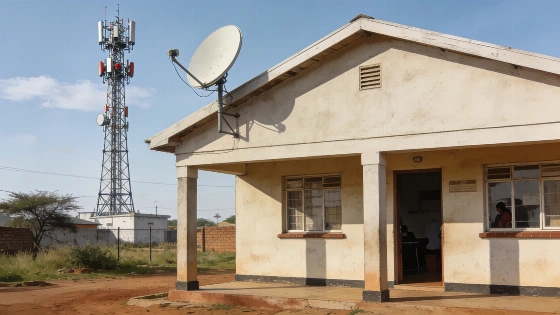
ICASA has said that fully aligning its licensing rules with the ICT Sector Code, including recognition of Equity Equivalent Investment Programmes (EEIPs), would require an amendment to the Electronic Communications Act (ECA). That position leaves operators seeking different ways to meet South Africa's transformation requirements facing a regulatory barrier.
Telkom has asked the regulator to recognise compliance options set out in the broader empowerment framework, including the Broad-Based Black Economic Empowerment Act and the ICT Sector Codes. In its submission, the company argues that the Equity Regulations impose requirements beyond that framework and create uncertainty for licence holders.
Telkom seeks broader compliance options
The Equity Regulations require individual licence holders to maintain at least 30% ownership by historically disadvantaged groups (HDGs) throughout the life of their licences. They also affect foreign telecommunications companies seeking to operate directly in South Africa, which must meet the threshold or use an eligible local arrangement.
Telkom says skills development and local supply-chain participation should count towards transformation objectives. It also proposes recognising investment in infrastructure and support for research and innovation. The company argues that direct equity ownership should not be the sole measure of a licence holder's contribution.
The operator links the issue to the capital demands of network expansion. Telkom says uncertainty and compliance costs can influence investment decisions, and that misalignment between the licensing rules and the wider empowerment framework has discouraged investment in digital infrastructure. It says transformation obligations should remain, with clearer and more flexible ways to demonstrate compliance.
Telkom made its submission as part of ICASA's inquiry into individual electronic communications network service (I-ECNS) licences. The regulator is considering whether issuing additional licences directly to new operators could improve competition and network coverage. Its preliminary assessment identifies strong demand for new licences. The authority's preliminary approach to direct applications was covered in this licensing report.
Satellite access depends on the rules
Starlink says the current ownership regulations prevent it from applying for the licences required to operate directly in South Africa. Starlink supports communications minister Solly Malatsi's proposal to allow foreign operators to meet transformation requirements through Equity Equivalent Investment Programmes (EEIPs).
Under the proposed approach, companies could make qualifying investments in areas such as education or infrastructure; skills development is another stated option. Starlink has proposed connecting 5,000 predominantly rural schools, saying the programme could benefit more than 2.4 million learners annually. The proposal is not an operating programme or an approved licensing arrangement.
Amazon Leo announced a partnership with South African provider Herotel in July 2026. Herotel would manage the local customer-facing operation while Amazon supplies satellite connectivity, with commercial services expected in 2027. The arrangement illustrates a local partnership model, but does not establish that a commercial agreement automatically meets licensing or ownership rules.
Telkom has also argued that incoming satellite operators should face the same licence conditions and social obligations as established telecommunications businesses. The company is seeking flexibility in how empowerment requirements are met while calling for comparable obligations across the industry.
The legal position remains contested. SpaceX has argued that wording in the Electronic Communications Act could allow alternatives such as EEIPs; ICASA says legislative amendment is required before it can reconsider the regulations. Business advocacy organisation Sakeliga filed a separate application in the Pretoria High Court on 11 November 2026, seeking to have ICASA's 13 May decision set aside. The organisation argues that Section 9(2)(b) of the Electronic Communications Act allows the regulator to prescribe alternative licensing conditions instead of applying a fixed 30% ownership threshold. The case is separate from Telkom's submission.