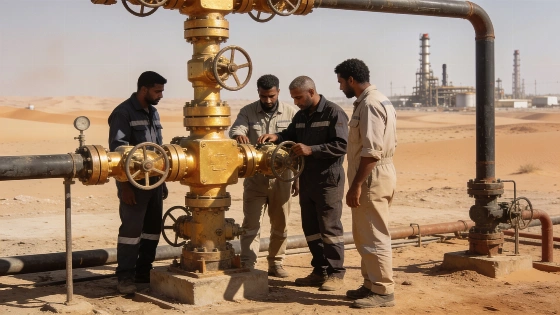
Libya’s oil and gas fields hold a fortune. But since Gaddafi fell, the fight over who controls this wealth has only grown sharper. The country’s next steps could bring either order or more turmoil.
In 2025, Libya exported approximately 342 million barrels of oil, with about 79% of this volume destined for European markets.
Energy riches and the challenge of fair growth
Libya’s economy runs almost entirely on oil. Geography makes things even tougher. Most of the 6.5 million people live along the Mediterranean coast. The rest of the country is mostly Sahara. That desert is not just empty land. It could be a huge asset. The "Desertec" project, a $550 billion plan, aims to turn Sahara sunlight into electricity for Europe and Libya. The Arab Spring gave these ideas new life. But the real test is whether Libya’s leaders can use oil money to build roads, schools, and jobs for everyone. Old habits die hard. Rent-seeking and elite deals have ruled for decades.
Libya sits close to Europe. Its oil and gas exports matter for neighbors. So does migration. For years, Libya has been a main route for people from sub-Saharan Africa trying to reach Europe. If migration is not managed, it could shake both Libya and European countries. Any new government will have to face this head-on.
Political splits and the search for unity
Since Gaddafi’s fall in 2011, Libya has not found peace. Rival governments, armed groups, and shifting alliances have made it hard to share oil money or hold national elections. The country is still split. In Tripoli, the Government of National Unity, led by Abdul Hamid Dbeibeh, holds power. In the east, a rival government backed by Khalifa Haftar controls territory. In August 2025, both sides, with help from the United Nations, agreed on a plan to hold presidential and parliamentary elections within two years. But the deal is not yet in place, according to Al Jazeera.
In August 2025, the '4+4' committee, comprising representatives from Libya's main political factions and supported by the UN mission, agreed on reforms to the High National Election Commission and changes to electoral law. The aim is to remove institutional barriers to national elections and establish a unified executive authority.
If Libya cannot set up a fair and open way to share its oil money, old patterns will return. Corruption and favoritism could just get new faces. The real challenge is bigger than stopping a new dictator. Libya needs a shared sense of purpose. Without it, reforms and rebuilding will stall.
What comes next?
Libya’s fate depends on three things: how leaders share oil money, how they bring together different groups, and how they use the country’s spot between Africa and Europe. If the government invests in real projects and jobs, Libya could become a North African success story. If not, the country could waste its wealth and fall back into chaos.
The stakes are huge. Libya’s choices will shape not just its own future, but also migration, energy, and politics across the Mediterranean. The next moves matter. They will decide if Libya’s revolution leads to real change—or just more division and missed chances.