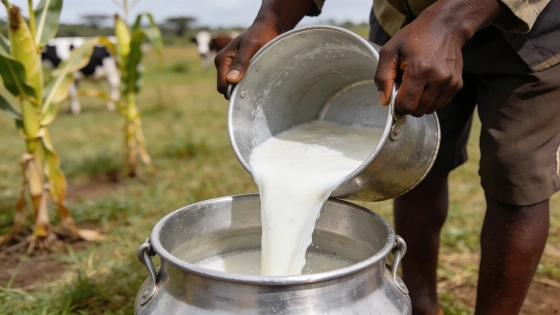
President William Ruto said on October 20 that the price paid to dairy farmers would rise from Ksh60 to Ksh65 per litre this month, with a Ksh2 quarterly bonus. The increase comes as a Central Bank of Kenya (CBK) survey finds rising business costs and points to possible pressure on staple food prices. Ruto made the announcement during Mashujaa Day celebrations in Eldoret, saying the rate would apply from October. He also said national milk production had increased by one billion litres and that the price paid to farmers had previously risen from Ksh35 to Ksh60, The Star reported.
The September 2026 CEOs Survey found purchase prices rose in the third quarter. Companies reported higher fuel and transport expenses, along with increased import and other input costs. Most executives expect purchase prices to rise further in the fourth quarter as input and shipping costs remain elevated.
Costs are building across food supply chains
Businesses have largely kept selling prices steady so far. Stiff competition and weak household purchasing power have limited their ability to pass higher expenses on to consumers.
Agriculture faces particular pressure. Seasonal rains and harvesting are expected to support activity, but dry conditions earlier in the year reduced pasture and raised animal-feed costs. Those expenses affect livestock farmers and related supply chains, including milk and maize production, which also rely on transport and energy.
The survey does not establish that retail prices will rise by a particular amount. The impact on consumers will depend partly on supply and on whether businesses can absorb additional costs. Kenya National Bureau of Statistics data showed fresh packaged milk prices rose 6 per cent in September and UHT milk prices increased 8 per cent, The Star reported.
Higher farm-gate price meets tight milk supply
Speaking at Mashujaa Day celebrations in Eldoret, Ruto said the new dairy rate would take effect in October. The announced adjustment is intended to improve farmers’ earnings, while processors continue to face limited raw-milk supplies and high feed costs. The government also announced plans to decentralise New Kenya Co-operative Creameries and give farmers greater ownership and control of its factories. Ruto said the government would pay about Ksh400 million in outstanding debts to milk producers by the end of October.
The Kenya Dairy Board reported that formal milk deliveries to processors fell from 84.4 million litres in June to 81.3 million litres in July 2026, a decline of about 3.7 per cent, largely because of fodder shortages. A higher farm-gate rate does not automatically mean an equivalent rise in shop prices: collection and chilling add costs, as does processing. Packaging and distribution add further expenses. Reports put some Nairobi retail prices at about Ksh80 for 500 millilitres.
Milk prices at collection points tracked by SAFIC AgriIntel, an initiative of Strathmore University using Ministry of Agriculture market data, had already risen in several counties in September compared with August. The median raw-milk price at collection centres increased from Ksh72.50 per litre in August to Ksh81.25 in September. In a narrower market sample, the median price of processed cow’s milk reached Ksh145, Pulse Kenya reported.
Business outlook improves despite cost pressures
Executives were more optimistic about business prospects and Kenya’s economic growth than they had been in July. The survey attributed the improved outlook to seasonal demand and tourism, while lower borrowing rates also provided support.
Companies nevertheless reported high energy costs and a high cost of doing business. The survey points to further increases in purchase prices during the fourth quarter.