Hydropower remains basic to Ethiopia’s electricity system, with the Grand Ethiopian Renaissance Dam (GERD) a major part of the country’s generation expansion.
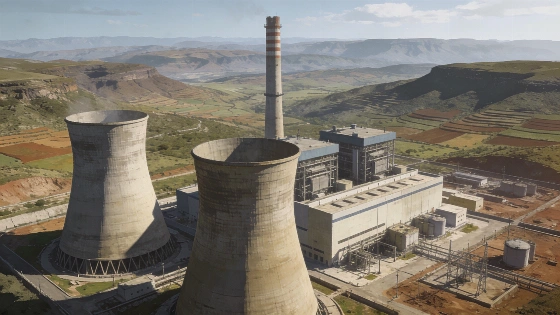
At the third Russia-Africa Summit in Moscow, Prime Minister Abiy Ahmed said Thursday that Ethiopia was next with Russia on plans for a nuclear power plant, Trendsnafrica reported. The cooperation dates back to an intergovernmental agreement signed in 2019 and a 2023 bilateral roadmap covering a possible nuclear power plant, a Nuclear Science and Technology Centre, nuclear infrastructure and workforce development, as World Nuclear News reported. In September 2025, Rosatom and Ethiopian Electric Power signed an action plan for the project in Moscow in the presence of Abiy and Russian President Vladimir Putin.
The project remains in the planning and negotiation stage. In October 2026, Abiy said Ethiopia planned two reactors of 1,200 MWe each, for a proposed total capacity of 2,400 MWe. He also said three potential sites had been identified from more than 30 locations assessed; the candidate sites had not been finalized. Ethiopia established the Ethiopian Nuclear Energy Commission in October 2025, and the body works directly with Rosatom. As of October 26, 2026, the parties were coordinating a draft intergovernmental agreement on the principles of construction, as TASS reported. They had signed a non-disclosure agreement in December 2025. Russian Ambassador Yevgeny Terekhin said signing the intergovernmental agreement would begin the design-and-engineering phase. The initial summit announcement did not identify a site, generating capacity, financing arrangement or construction schedule.
How nuclear power could fit into Ethiopia’s energy mix
Nuclear generation can provide continuous electricity, potentially complementing hydropower as electricity demand grows alongside industrial expansion and urban development. The proposed two-reactor capacity is 2,400 MWe, and related coverage has described the programme as at least 10 years away. Abiy has also said the nuclear partnership would support specialist training and access to medical isotopes, extending its aims beyond electricity generation.
The power-sector picture also includes transmission investment. Ethiopian lawmakers backed a 31-year IDA loan for the first phase of grid upgrades in Addis Ababa, including transmission work and new substations, as outlined in an earlier grid loan report.
A nuclear programme would require large investment and advanced technical expertise. Ethiopia’s 2023 roadmap included developing national nuclear infrastructure and training personnel. Terekhin has said the cooperation is being conducted in accordance with International Atomic Energy Agency standards and regulations. The proposed arrangements also include training specialists and pursuing access to medical isotopes. Signing the draft intergovernmental agreement would mark the start of design and engineering; the project has not yet entered construction.