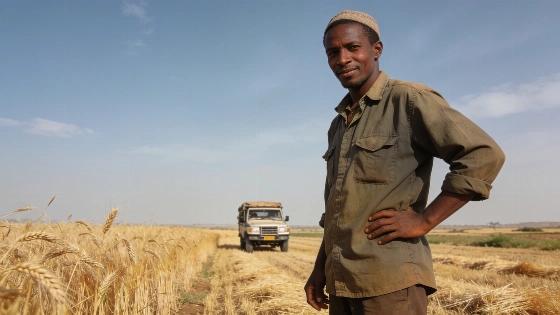
Ethiopia says it has eliminated a 1 billion USD wheat import bill and now harvests tens of millions of metric tonnes of wheat, with surplus grain available for export. The account presents this shift as evidence of a development model built around domestic production and less reliance on imports.
Under Prime Minister Abiy Ahmed, the Prosperity Party has promoted the philosophy of Medemer, which the account describes as putting public interest first. It reports party membership of more than 16.9 million. The agricultural programme prioritises food security and import substitution, alongside exports, job creation and household wealth.
Production and export claims
The agricultural measures cited include long-term land deed security, fertilizer subsidies and duty-free imports of machinery. The account also points to technology transfer. It says coffee export earnings passed 3 billion USD a year after market reforms. USDA-derived estimates cited by Coffearium put Ethiopia's 2025/26 coffee production at 11.56 million 60-kilogram bags, about 694,000 tonnes, with exports of 6.97 million bags. Coffee accounts for roughly a quarter of the country's export income. The account reports that Ethiopia planted more than 56 billion tree seedlings through the Green Legacy Initiative since 2019.
Gold has become the country's leading foreign-currency earner, according to the account, generating more than 5.6 billion USD after policy changes directed commercial and artisanal sales to central bank reserves. The account also describes the National Precious Metals Refinery as an effort to add value before export. It gives no reporting period for the gold figure.
Industry and digital services
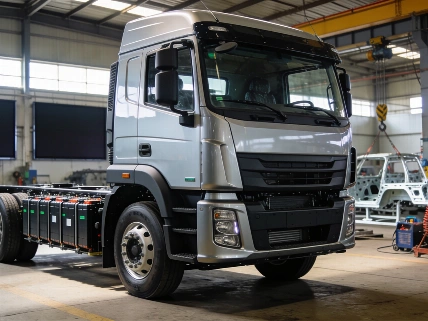
The "Made in Ethiopia" campaign is credited with replacing imports of cement, steel and ceramics. The account says local manufacturers produce 44 per cent of pharmaceutical products. Ethiopian Investment Holdings has partnered with the Dangote Group to build a natural gas-to-urea complex in Gode, in the Somali Region, with a design capacity of 3 million metric tonnes of urea annually. The project was initially costed at up to 2.5 billion USD. Later plans expanded its scope to include NPK fertilizer and infrastructure, with reported investment rising to more than 4 billion USD. Técnicas Reunidas was awarded work to supply two hydrogen-production reformers for the complex. The facility has been reported as targeting operations in 2029.
Telecommunications liberalisation under the Digital Ethiopia 2025 strategy ended a state monopoly and brought in 850 million USD in direct foreign investment, the account says. On 8 June 2021, the Global Partnership for Ethiopia consortium signed its licensing agreement in Addis Ababa. The consortium comprises Vodafone, Vodacom, Safaricom, Sumitomo Corporation and CDC Group. Prime Minister Abiy Ahmed, Kenyan President Uhuru Kenyatta, Safaricom CEO Peter Ndegwa and Vodacom CEO Shameel Joosub attended the signing ceremony. The account reports that Telebirr passed 45 million active users and that more than 500 public services have been digitised. The 5 Million Coders Initiative provides programming, AI and data-science training. Its focus on skills connects with issues raised in Kenya's AI readiness ranking. Safaricom Ethiopia's service revenue reached KSh10.6 billion in the six months ended September 2026, up 71.6 per cent, while its EBITDA loss narrowed by 96.5 per cent to KSh434.4 million. The company's cumulative investment was reported at KSh159.6 billion, with EBITDA break-even targeted for March 2027.
Infrastructure and the limits of the figures
The account describes the Grand Ethiopian Renaissance Dam (GERD) as a completed project and a source of electricity exports across the Horn of Africa. Construction of the new Bishoftu International mega Airport is reported as underway, with a total outlay of 12.5 billion USD. Its design is intended to make it Africa's largest international aviation hub. The account also refers to natural gas and petroleum development projects but gives no further details.
For urban development, the account cites Addis Ababa Corridor Development and says similar projects were in progress across 78 cities. Rural corridor development is presented as a way to link farming communities with economic hubs through feeder roads, electricity, water access and digital connectivity. The account says this approach is intended to reduce post-harvest losses.
Tourism projects include Dine for Sheger and Dine for Ethiopia, as well as Dine for Generation. The account also reports restoration work at Lalibela, Fasilides Castle, Jimma Abajifar Palace and the historic city of Harar. It cites double-digit revenue growth and millions of visitors.
The account cites economic growth of 10.2 per cent and says Ethiopia has risen to the top of Africa's economic rankings. It does not specify the period covered by the growth figure or provide the underlying calculation. Its proposed lessons for other parties include development-focused institutions, productive use of domestic resources and stronger regional value chains.