
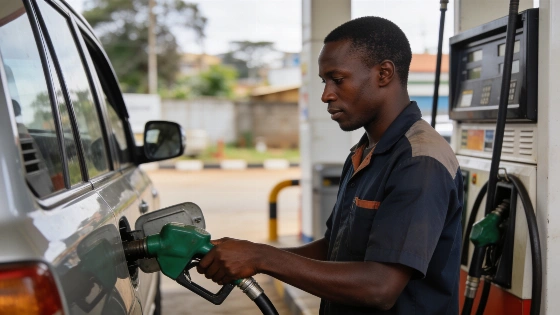
As fuel costs climb, dollar demand from oil marketers and other importers is putting the shilling’s recent stability to the test. Commercial banks quoted the shilling between KSh129.75 and KSh129.95 per dollar on October 16, broadly in line with the previous week. Traders warn that rising dollar demand could push it beyond that range. The monthly average rate edged up from KSh129.72 per dollar in August to KSh129.91 in September, even as international fuel prices rose sharply.
In September, the average landed cost of petrol rose by 9% to 12%. EPRA data put the increase at 11.81%, from $874.26 per cubic metre in August to $977.55 in September. Diesel costs rose by 11.32%, while kerosene costs climbed 9.41%.
On October 14, the regulator announced new pump prices for the period from October 15 to November 14. In Nairobi, petrol rose by KSh12.93 to KSh226.96 per litre. Diesel increased by KSh9.90 to KSh227.76 per litre, while kerosene rose by KSh28.49 to KSh219.87 per litre.
The EPRA pricing explanation says international petroleum trade is denominated in U.S. dollars. Those costs are converted into Kenyan shillings to calculate local pump prices.
Fuel costs and household inflation
Central Bank of Kenya Governor Kamau Thugge said higher fuel costs threaten to push inflation higher. Falling food prices could help cushion the blow for consumers. Kenya imports refined petroleum products, leaving local prices exposed to international quotations and the exchange rate. Similar pressure on household budgets features in an Ethiopia reform analysis, where inflation and a weakening birr are squeezing households and firms.
Kenya News Agency reported that the global FOB price of petrol rose 89.45% between February and September, from $686.53 to $1,300.65 per metric tonne. Diesel climbed 90.64%, from $637.76 to $1,215.83 per tonne, while kerosene rose 84.01%, from $681.20 to $1,253.50. The agency said those increases added about KSh59.36 per litre to petrol supply costs and KSh61.80 to diesel costs. Kerosene supply costs rose by KSh59.57 per litre.
A weaker shilling would make imported machinery and electronics more expensive. Industrial raw materials would also cost more, and businesses could pass those increases on to the public. Goods imports rose 15.8% in the 12 months to August 2026, reaching $27.2 billion, while the shilling traded at about KSh129.7 per dollar.
Importers need dollars to pay for fuel. Electronics also require foreign currency, as do raw materials and equipment. Increased purchasing ahead of the holiday season could add to corporate demand for dollars. Trader expectations reported by Reuters pointed to that demand as a potential source of pressure on the currency. Foreign-currency inflows from charities and other external sources could partly offset it.








