
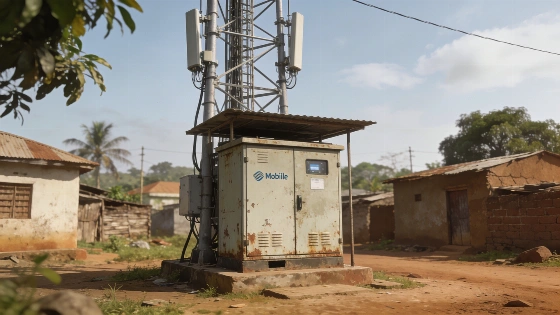
Areeba Guinée's mobile subscription market share fell from 22.6 per cent in late 2024 to 13.4 per cent in the second quarter of 2026. Orange Guinea's share rose to 85.4 per cent over that period.
Guinea is seeking support from Morocco's Maroc Telecom to revive state-owned operators Guinée Télécom and Areeba Guinée. Talks could bring technical and operational expertise, but no formal investment agreement has been announced. Earlier network coverage examined capacity tests in other telecom markets, including those discussed in earlier network coverage.
Network changes and spectrum costs
In Belgium, Orange and Proximus, along with Telenet/BASE, plan to phase out 2G between 2028 and 2029, according to regulator BIPT. The change will affect devices that depend on the older network, including smart meters and vehicle emergency-call systems, as well as security alarms and lifts.
Operators are retiring older infrastructure as customers increasingly use 4G and 5G. The transition is intended to lower operating costs and energy consumption while freeing spectrum for newer technologies. BIPT says customers should identify affected devices and receive information ahead of the shutdown to support migration.
Mexico plans to cut annual mobile spectrum fees by 12 per cent in 2027. The proposed reduction applies to frequencies including 800/850 MHz, 1.7/2.1 GHz, 1.9 GHz, 2.5 GHz and 3.5 GHz. Charges for the 600 MHz and 700 MHz bands would remain unchanged. The move addresses operators' concerns that recurring spectrum costs have constrained investment capacity and network expansion plans.
Other regulatory developments
Nigeria's telecom regulator is considering extending spectrum licence terms from 10 to 15 years to encourage long-term network investment. In Côte d'Ivoire, authorities have warned unlicensed Wi-Fi resellers that their equipment could be seized and they could face prosecution.








