US cable operators are losing home broadband customers to fixed wireless and fibre. That has sharpened competition for subscribers. In the quarter ended September 2026, Comcast lost 144,000 domestic residential broadband subscribers while adding 368,000 net wireless lines. Its domestic broadband base stood at about 28.3 million, down from roughly 28.9 million a year earlier. That market pressure gives Jio Platforms a potential opening for its wireless technology.
Reuters reported on November 3, citing two people familiar with the matter, that Jio had discussed licensing its broadband system to Comcast and Charter Communications in exchange for potential stakes in their businesses. The proposed technology-for-equity arrangement could give Jio a US foothold, though no timetable has been set for an agreement with any of the companies it has approached.
Jio did not respond to Reuters' queries. Spokespeople for Comcast and Charter declined to comment.
Licensing talks and the technology
Jio has also held discussions with South Africa's MTN Group. Those talks broke down over valuation and licensing issues, the sources said. One said MTN could not persuade Jio to invest at a valuation it considered satisfactory. MTN said it does not comment on market speculation.
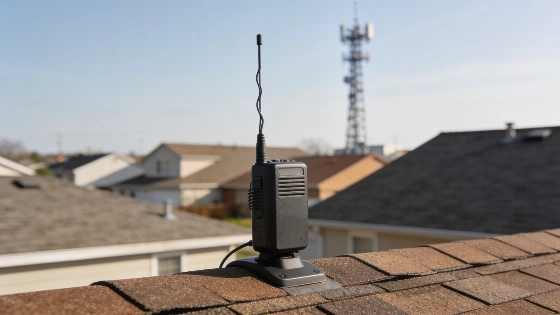
Jio's platform uses unlicensed Wi-Fi frequencies rather than licensed mobile spectrum. Transmitters on nearby towers or rooftops beam broadband signals to receivers installed on buildings, without a cable connection to each home. Reliance Industries calls the system a "global first" and says it can deliver internet to homes more cheaply than traditional cable networks or mobile-based services.
Jio has said it is targeting 10 to 15 substantial international partners for its technology platform, looking for partners with sufficient scale. Its planned offering extends beyond unlicensed-band radio (UBR). It also covers fixed-wireless access and 5G technology. Telecom software is another part of the portfolio, alongside a feature-phone operating system. The strategy is technology-led and asset-light: Jio supplies technology or managed services rather than financing and building complete overseas networks. A separate issue in the wider telecom sector is network capacity, explored in earlier telecom coverage.
Competition in the US market
Comcast co-CEO Mike Cavanagh said on the company's earnings call that "fixed wireless remains aggressive and continues to take share," Reuters reported. He also said satellite providers could eventually win broadband customers.
Cable companies nevertheless held 62% of US residential broadband connections at the end of 2024, according to S&P Global Market Intelligence. Comcast's domestic wireless service revenue rose 14.7% to about $1.05 billion in the third quarter of 2026, and its domestic wireless lines reached roughly 10.6 million. Neil Shah, director at Hong Kong-based Counterpoint Research, told Reuters: "Telecom spectrum is a scarce resource and is expensive. UBR can be very attractive to likes of Comcast and Charter as they can deliver cellular quality broadband over spectrum they don't have to buy,"
Jio is India's largest telecom company, with more than 500 million subscribers, second only to China Mobile among single-country operators. It also has nearly 15 million wired broadband users. Reliance says more than 6.5 million users are now powered by UBR.
Controlled by Mukesh Ambani's Reliance Industries, Jio Platforms listed in Mumbai after a record-breaking $3.2 billion IPO. Its international expansion is co-led by Dan Bailey, former chairman of Deutsche Bank's technology, media and telecom practice, and senior executive Mathew Oommen.