
Fuel importers in Kenya are watching global oil markets with growing unease. Murban crude jumped to USD101.67 per barrel on 8 October 2026, up from USD95.76 the week before, Central Bank of Kenya (CBK) data shows. At the current exchange rate of Ksh129.94 to the dollar, importers now face a landed cost of about Ksh13,207 per barrel. The landed cost has not reached this level in recent months.
CBK analysts point to Middle East tensions as the basic driver behind the 6.2 percent weekly surge in Murban crude. Disruptions in the region have rattled global supply chains and pushed up costs for countries that rely on imports. Kenya, heavily dependent on foreign oil, now faces a direct hit to its import bill. In July 2026, mineral fuels and related products accounted for about one-third of Kenya's direct imports, totaling KSh108.6 billion out of KSh338.8 billion, The Kenya Times reported.
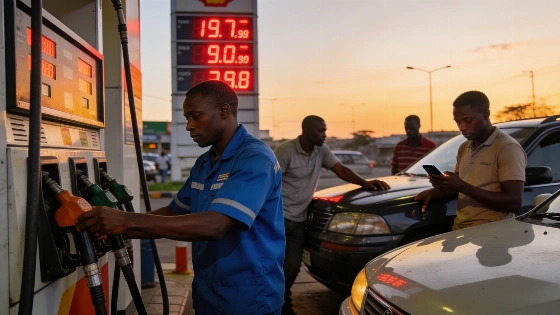
The Energy and Petroleum Regulatory Authority (EPRA) is due to set new pump prices in its next monthly review. Its formula tracks international import costs, so the latest spike is likely to filter through to consumers. The scale of the increase will depend on EPRA's final calculations and any government interventions. For now, EPRA has kept Nairobi's maximum retail petrol price at KSh214.03 per litre and diesel at KSh217.86. Kerosene remains at KSh191.38, information from 254.ke.
Currency markets have offered little relief. The shilling traded at Ksh129.94 to the dollar on 8 October, barely changed from Ksh129.71 a week earlier. The jump in oil costs is so coming almost entirely from global price moves, not a weaker local currency. The CBK says international oil prices remain high and extremely volatile amid supply disruptions linked to the Middle East conflict and ongoing global uncertainty. It has warned that rising oil prices could increase import costs and widen the current account deficit in 2026.
Kenya's foreign exchange reserves stand at USD14.736 billion, covering 5.9 months of imports. That buffer sits well above the CBK's statutory minimum and gives the country some breathing room against external shocks, including pricier petroleum shipments.
The Monetary Policy Committee, which met on 7 October, flagged higher global energy and food prices as a basic inflation risk. The committee left the Central Bank Rate unchanged at 8.75 percent but noted that "global inflationary pressures have increased due to higher energy and food prices." CBK expects inflation to stay within target for now, supported by monetary policy and government action, alongside a steady shilling.
Rising oil prices are squeezing economies far beyond Kenya. The CBK bulletin reports euro area inflation at 3.8 percent in September, up from 3.2 percent in August, mainly due to energy costs. In the US, unemployment ticked up to 4.2 percent and the dollar gained ground. Spot gold prices slipped as investors moved away from safe-haven assets.
Kenya's immediate challenge is containing the impact on its import bill and keeping inflation in check. The full effect on local pump prices will become clear after EPRA's next review. Until then, policymakers must balance shielding consumers from global shocks with the need to maintain fiscal and monetary stability.
Kenya's exposure to global oil swings remains acute. The country has seen petrol prices rise 15.8% and diesel 26.9% year-on-year as of September 2026, information from a Khusoko inflation review.








