Under amendments before the Senate, a county would need written Treasury clearance before opening or closing a bank account. Senators say the requirement could delay county services and give the national government greater influence over devolved finances.
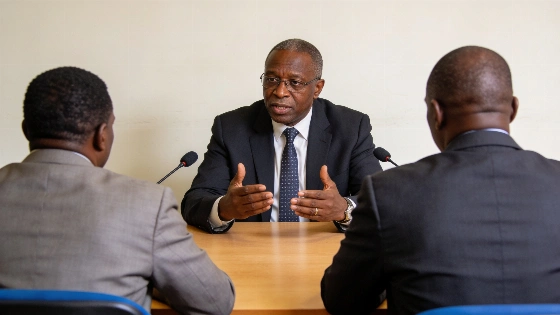
CBK Governor Kamau Thugge appeared before the Senate Standing Committee on Finance and Budget on Tuesday, November 17, 2026. Ali Roba chairs the committee.
How the proposed account system would work
The amendments would require prior written approval from the National Treasury to open or close county accounts. They also propose pooling county funds in a Treasury Single Account (TSA) held at the Central Bank of Kenya. The TSA is part of a wider cash-management reform: ministries, departments and agencies moved to the system from July 2025, while counties were scheduled to migrate during the 2026/27 financial year. Under the hybrid model, government entities retain transaction accounts, with end-of-day balances swept to the main CBK account. The National Treasury says the arrangement is intended to reduce idle balances and improve visibility of public cash, as Business Daily reported.
Thugge argued that holding county deposits at the CBK would make public funds easier to monitor and reduce unnecessary borrowing. He also pointed to the number of accounts held by county administrations. "We fully support this proposed amendment," he told the committee. "By ensuring county deposits are held at the Central Bank rather than across multiple commercial banks, the National Treasury gains better visibility and avoids incurring unnecessary interest payments when idle resources are already available." The Treasury reported that access to idle public cash through the TSA reduced its overdraft obligations to the CBK by KSh90 billion. Its Draft Budget Policy Statement said the cost of CBK overdraft financing fell by 61 per cent in the 2025/26 financial year.
Thugge's separate argument that lower lending rates depend partly on reduced domestic Treasury borrowing was covered in earlier reporting.
Thugge proposed that counties keep one commercial bank imprest account, with primary operational and project accounts at the CBK. He said existing commercial accounts could be consolidated into one approved imprest account without fresh authorisation. Counties seeking additional accounts later would need Treasury approval.
Senators cite devolution and service delays
Kakamega Senator Boni Khalwale questioned whether Treasury approval would compromise the constitutional independence of the two levels of government. "Management of public funds is a critical role of any government," he told the committee. "If the national government will now be involved in authorising bank accounts at the county level, does it not affect the constitutional provision that the two governments are independent?"
Committee Vice Chairperson Tabitha Mutinda warned that another approval stage could slow financial operations. She pointed to existing delays in fund requisitions involving the Office of the Controller of Budget and said further approvals in Nairobi could make it harder for counties to access resources. The timing of transfers also came under Senate scrutiny: on November 10, the Senate Finance and Budget Committee adopted a report on KSh71.1 billion in proposed additional county allocations for 2026/27. It urged the Treasury to follow approved cash-disbursement schedules so counties receive funds in time for public services, the committee report said.
Mutinda also raised the needs of municipalities and water companies. Public hospitals managing Facility Improvement Funds were another concern. These institutions rely on timely access to money to sustain operations and provide services.
Thugge said account approval would generally be a one-off process, leaving county treasuries responsible for daily financial operations. Some areas, including Wajir, have no physical CBK branches. In response, Central Bank officials told senators that 99 per cent of county transactions were already digital. Thugge said electronic channels enabled all 47 counties to open accounts and make payments remotely. Counties could manage deposits without visiting a branch.
At the close of the session, Roba urged the CBK to prioritise technological solutions over legal restrictions. The committee expects to invite the National Treasury to present its position at a later sitting.