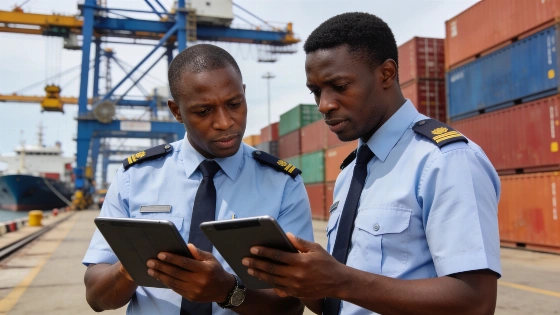
At the 72nd anniversary of the Association of Nigerian Licensed Customs Agents (ANLCA) in Lagos, Liberia’s customs chief did not mince words. Hon. James L. Hinneh Jr., President of the National Customs Brokers Association of Liberia (NCBAL), stood before industry leaders and called for a new way of doing business. He wants customs brokers to lead Africa’s trade, not just stamp forms.
Before the launch of Nigeria's National Single Window in March 2026, clearing cargo at the country's ports could take up to 21 days, with the new system aiming to reduce this to just 48 hours.
Customs brokers as trade catalysts
Hinneh said customs brokers are no longer just paper handlers. He called them “essential catalysts linking governments, private enterprises, port operators, and global markets.” He put it simply: “Behind every container is a business. Behind every business is a family. Behind every efficient supply chain is an opportunity. If we make legitimate trade move better, we help opportunity move faster.”
Expectations are rising. Customs professionals, freight forwarders, importers, and exporters face more pressure as African economies connect. Agencies must do more than enforce rules. They must help goods move quickly and add real value.
Digital transformation and partnership
Hinneh’s plan is clear. He wants digital systems, open rules, and high standards. He called for clear procedures and for these rules to shape daily port work. The goal is to cut delays and improve service. Hinneh proposed a formal partnership between NCBAL and ANLCA. He listed practical steps: technical training, professional exchanges, mentorship, knowledge sharing, and joint digital projects. These would help customs workers in both countries handle shared problems.
The Nigerian Ports Authority reported a cargo throughput of 129.3 million metric tonnes in 2025, with 68.2 million tonnes and 815,236 TEU handled in the first half of 2026. However, at least 27 government agencies are involved in Nigeria's cargo clearance process, often working sequentially, which has been identified as a key cause of delays and a major argument for interoperable digital systems.
Editorial analysis: Africa’s trade ambitions on the line
Hinneh’s speech marks a turning point. African customs agencies cannot stick to manual paperwork and unclear rules if they want real regional growth. The African Continental Free Trade Area needs more. Liberia’s push for digital customs work with Nigeria is not just talk. It is a demand for honest, modern, and competitive trade. If customs leaders act, businesses and shoppers will see faster, cheaper, and more reliable trade. If not, Africa’s big plans could stall at the border.
A BusinessDay report says Nigeria launched its National Single Window in March 2026. The goal is to bring all trade steps onto one digital platform. But the report notes that digital systems are still split up. The Nigeria Ports Authority, Nigeria Customs Service, terminal operators, and shipping companies each use their own systems. They do not fully share data.
Legal experts like Ugochukwu Eze say the National Single Window does not yet have its own law. This could open it to legal disputes. It also clashes with Nigeria's Tax Administration Act on how such a platform should be set up.