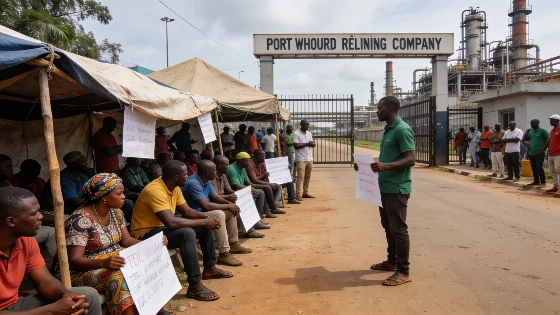
On October 6, 2026, support staff at the Port Harcourt Refining Company in Eleme, Rivers State, gave management a clear warning. They want seven months of unpaid wages and a new salary structure put in place. If not, they say the refinery will close in 48 hours. At press time, Nigeria National Petroleum Company Limited (NNPCL) had not responded.
The combined design capacity of Nigeria's three state-owned refineries—Port Harcourt, Warri, and Kaduna—is estimated at around 445,000 barrels per day, but recurring shutdowns and labour disputes have hampered consistent operations.
Demands and accusations against management
The workers want more than back pay. They are asking for a N1 million housing and rent relief. They say rent and living costs keep rising. Their current monthly pay is between ₦90,000 and ₦165,000. They call this too low. They also want benefits restored. Some of these have not been paid for over ten years, according to a report by The Nation.
The union says the refinery coordinator is blocking the new pay structure. They claim he is protected by close ties to the national presidency. Union members call this "insubordination." They want him removed. They are asking President Bola Ahmed Tinubu to step in and stop any threats against workers.
Port Harcourt Refinery resumed loading petroleum products in November 2024 after rehabilitation, but by May 2025, the facility was again shut down for technical maintenance, highlighting ongoing challenges with sustainable operations at Nigeria's state-owned refineries.
Broader impact on Nigeria's oil sector
This fight shows how often labour and management clash in Nigeria's oil and gas industry. Wage delays and slow action can stop key sites from running. The push for the GCEO-approved salary structure, set for October 1, 2026, is part of a bigger call for openness and fairness. The demand for N1 million rent relief shows how hard life has become for refinery workers.
By protesting and appealing to the federal government, support staff want more than just their pay. They want trust restored in safety and management. What happens next will decide if Port Harcourt Refining Company stays open. It could also shape how NNPCL handles worker complaints at other sites.
The standoff at Port Harcourt is a test. Will management fix old problems? Can the federal government enforce real change at its top energy companies? If support staff are ignored, the refinery could grind to a halt. The fallout could spread far beyond Eleme. The clock is ticking. Only real action can bring back stability and trust in Nigeria's oil sector.