Africa accounts for only a tiny fraction of global data-centre capacity despite being home to nearly one-fifth of humanity, President Cyril Ramaphosa said in an address on Wednesday, 18 November 2026. He argued that this gap could leave the continent dependent on technologies developed elsewhere unless South Africa builds capabilities across the AI economy. The Africa Data Centres Association, citing Infrastructure Masons, estimated that the continent represented 0.6% of global data-centre capacity in November 2026.
Speaking at the South Africa and the AI Opportunity Conference in San Jose during his working visit to Silicon Valley, Ramaphosa called for investment in computing infrastructure, alongside stronger research and skills development. In remarks during the visit on 16 November, he said South Africa must move beyond consuming AI and digital technologies developed abroad. It must build domestic capabilities, including local enterprises and intellectual property, as the government reported. He presented the gathering as a chance for South Africa to make its own case to technology companies and investors, rather than simply seek access to systems developed abroad.
Power and computing capacity are central to the pitch
Ramaphosa cited estimates that major American technology companies were expected to invest hundreds of billions of dollars in AI infrastructure during 2026, with figures approaching 670 billion dollars. He said advanced computing capacity remains concentrated in a small number of countries, giving them advantages in the emerging economy. The Africa Data Centres Association's estimate placed the United States' share of global data-centre capacity at about 45%.
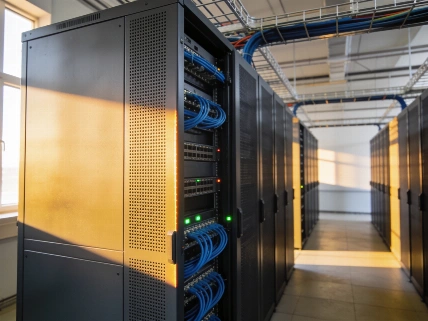
For South Africa, the investment case depends on physical infrastructure as well as software. Data centres need reliable electricity. They also require grid connections and telecommunications networks. Ramaphosa pointed to the country's solar and wind resources, then cited electricity-sector reforms and progress in reducing load shedding as foundations for further development. He described renewable energy as part of the country's investment proposition and cited abundant solar and wind power, according to South African government remarks.
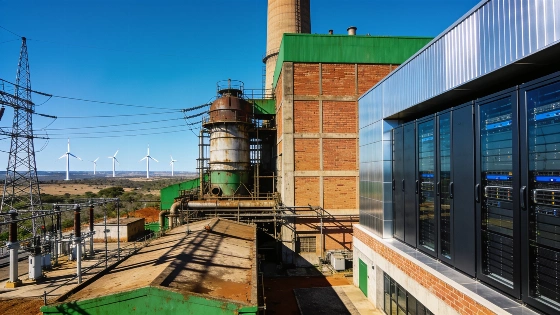
He also identified power-station sites nearing the end of their operational lives as potential locations for redevelopment. Some already have grid connections and transport infrastructure, he said. Any conversion would depend on planning and technical assessment, as well as investment. The address proposed data centres and advanced manufacturing as possible uses; it did not announce specific projects or commitments.
Building facilities alone would not meet the government's wider aims, Ramaphosa said. He called for investment to support local suppliers, while also developing skills and providing computing capacity for researchers, businesses and public institutions. The government has identified data centres and fibre-optic networks as investment priorities. Its list also includes cloud services, advanced computing, research and development, and technology-driven industries. South Africa already hosts almost 70% of the data centres established on the continent, according to government reporting published on 17 November; Ramaphosa separately described the country as accounting for the majority of Africa's total data-centre capacity. The infrastructure question has also appeared in earlier coverage of African AI development and reliance on overseas computing platforms.
Microsoft, Amazon Web Services and Google have data-centre or cloud-computing operations in South Africa. The country is also home to approximately 600 American companies, according to the government report published on 17 November. These facilities establish a regional data-centre base. The government's stated objective is to develop locally owned AI applications and intellectual property for South Africa and the wider African market, with potential to reach global users.
Local research and adoption remain part of the plan
Ramaphosa said African languages and experiences remain underrepresented in data used to develop leading AI systems. He cited isiZulu and isiXhosa, as well as Sesotho and Sepedi. Setswana and Tshivenda were also among the languages he named, alongside Xitsonga, which systems need to understand to serve South Africans more equally. He called for stronger African datasets and language research, with privacy protections and responsible data use.
He also urged closer work between South African researchers and international scientists, alongside investment in local computing facilities. The address set out an ambition for universities and research institutions to generate intellectual property and new businesses, rather than focus only on preparing graduates for jobs at technology companies elsewhere. Ramaphosa said local innovators should develop AI enterprises and applications, along with intellectual property that can serve markets across the continent and beyond.
AI adoption across established industries formed another part of the case. Ramaphosa described potential uses in mining and agriculture, as well as manufacturing and energy. He also cited healthcare, education and public services. These were presented as opportunities, not as measured outcomes already achieved in South Africa.
He said the country's national approach should address the risk that automation could disrupt work in a country already facing high unemployment. The address called for stronger mathematics and digital education, alongside expanded technical training. It also called for programmes to retrain workers affected by technological change. Government, business and organised labour would need to work together, he said.
Investment remains a proposal rather than a confirmed outcome
Ramaphosa invited technology companies to invest in computing infrastructure and establish research operations in South Africa. He also called for partnerships with universities and science councils, while urging support for local technology firms and skills programmes for South Africans. The speech did not identify companies that had agreed to take part.
He called for a coordinated investment proposition that would bring suitable sites and electricity connections together for prospective investors. It would also cover approvals and infrastructure planning. The address gave no timetable for that work or confirmed investment commitments.