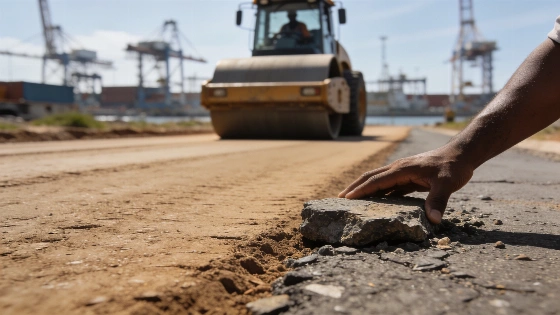
At Richards Bay, deteriorating access roads have forced heavy vehicles to slow down and pushed up maintenance costs, extending the trip from terminal gate to vessel loading. The roads serve terminals handling coal and other bulk freight, including breakbulk cargo.
Transnet National Ports Authority began an 18-month rehabilitation programme in October 2026. The R375 million (US$22.5 million) project covers Urania Road, as well as Newark Road and Ventura Road.
Upgrades target heavy-vehicle access
The work includes pavement strengthening and road widening, along with concrete surfacing. The project will also improve drainage and stormwater systems, and add road-safety enhancements.
TNPA expects the changes to increase road capacity and improve road conditions. It says they should also reduce truck turnaround times and support more reliable port operations.
Concrete surfacing suits corridors carrying sustained heavy axle loads because it resists deformation better than asphalt. It can reduce the frequency of long-term maintenance, but comes with higher initial costs and longer construction periods.
Road access and the rail constraint
Winnie Mpanza, acting Port Manager at Richards Bay, said the investment showed TNPA's commitment to maintaining port infrastructure in support of trade. She said the rehabilitation would improve safety, meet port users' needs and support future growth and investment.
The project is expected to create about 72 construction jobs. It is part of TNPA's wider infrastructure renewal programme and supports Transnet's Reinvent for Growth strategy.
The port handled approximately 24 million tonnes of coal exports through the Richards Bay Coal Terminal in 2025, compared with the terminal's capacity of 91 million tonnes. Rail constraints were the primary limitation. Road improvements address the landside connection, not that rail bottleneck, while better access can support trucking when Transnet Freight Rail capacity falls short. Port upgrade priorities elsewhere in Africa, including those discussed in Nigeria's port plans, also put landside access in focus.