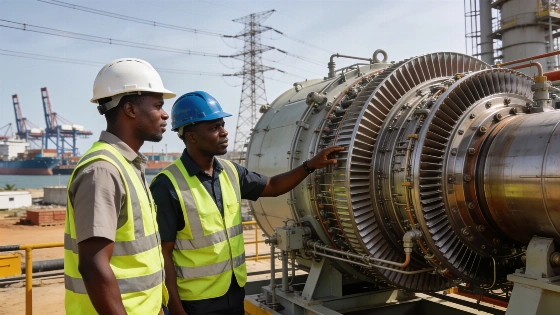
Russian officials have made a direct pitch to West African governments. They want to sell gas turbine power plants to Togo and Niger. Both countries have relied on electricity from Nigeria for years. Now, debts are piling up and supply is under threat.
UEC reports that its enterprises have produced 675 power generation units with a combined capacity of 6 GW, accumulating over 26 million operating hours in total.
Debt and dependence on Nigeria
Togo and Niger buy most of their electricity from Nigeria. This setup is getting shaky. The Nigerian Electricity Regulatory Commission (NERC) says Togo, Niger, and Benin together owed Nigeria $17.8 million for power. In the second quarter of 2026, they paid only $8.67 million out of $18.84 million billed. That is a payment rate of just 46.02%. The unpaid balance for the quarter hit $10.17 million, according to a NERC report.
Earlier this year, Togo’s state utility, Compagnie Energie Electrique du Togo (CEET), asked Nigeria’s Niger Delta Power Holding Company (NDPHC) for more power. NDPHC was already sending about 75 MW. CEET’s director-general praised the steady supply from Nigeria. But the real problem—rising demand and unpaid bills—has not gone away. NDPHC runs 10 power plants with a total of about 4,000 MW. That includes 28 gas turbines and three steam turbines. The company has started special supply programs for big customers on commercial terms, as reported by The Nation.
Russia's move and local goals
Russia is not just selling hardware. UEC says it wants to help build port infrastructure, close power gaps, and set up joint ventures with local firms in Togo and Niger. Russia is looking for a foothold in West Africa’s energy market. Both Togo and Niger want to boost their own power generation and cut the risk of outside supply shocks. As of early October 2026, there are no public details on construction dates, how much equipment will be sent, or what exactly will be built. Talks are focused on possible distributed generation projects.
The first Russian-Togolese Intergovernmental Commission convened in Lomé from September 29 to October 1, 2026, covering energy, hydrocarbons, transport, mining, and technology transfer. Several draft agreements still required further development and signing following the talks.
What could change in West Africa
If Togo and Niger take Russia’s deal, the region could see a shift in power supply. The new plants would not replace Nigerian electricity overnight. But they would add more generation. That could ease pressure on cross-border imports and lower the risk of blackouts. For Russia, this is a chance to get a bigger role in a market where demand for steady, affordable power keeps rising.
Russia’s push into West Africa is a direct answer to the problems caused by heavy reliance on Nigerian electricity. By offering gear built for local needs and promising to work with local companies, Russia is pitching itself as a real alternative. The next step depends on whether Togo and Niger are ready to move away from old suppliers and try new partnerships. The stakes are high. The region needs reliable power.