Telkom's prepaid business generated R7.94 billion in the six months ended September 30 as South African operators stepped up promotions. Prepaid data revenue climbed 12% to R6.44 billion, while the company's value-led offers helped mobile data revenue rise 8.7%.
Data accounted for 82% of Telkom's mobile service revenue. The company said free voice calls bundled with data purchases supported growth, while Vodacom and MTN narrowed the price gap with more aggressive promotions targeting cost-conscious customers.
Satellite services move towards phones and devices
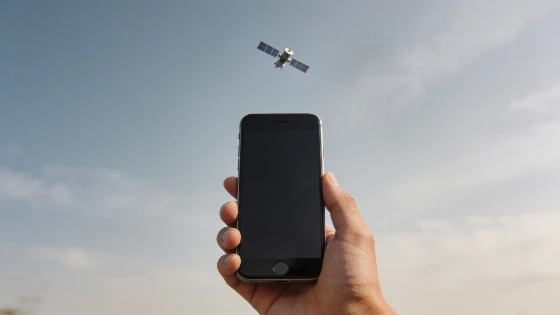
Iridium Communications has activated Iridium NTN Direct, a standards-based service combining narrowband Internet of Things (NB-IoT) with direct-to-device connectivity. Iridium calls it the world's first service of this kind with global coverage. It uses Iridium's low-Earth-orbit constellation and globally coordinated L-band spectrum to connect compatible chipsets beyond terrestrial mobile networks.
Its intended uses include emergency messaging and wearables, as well as asset tracking and fleet management. The service is also designed for connected vehicles and smart agriculture, with utility meters and industrial monitoring among its other applications. Iridium has certified Nordic Semiconductor's NRF9151 module; a firmware update planned for January 2027 is intended to enable existing devices. Deutsche Telekom IoT and Vodafone IoT are partners, while availability in each market depends on regulatory approval.
The wider satellite-to-device push also includes SES's leadership of industrial activities for SELYCE, a European initiative established with the European Space Agency (ESA). The project is supported by the Luxembourg Space Agency. Belgium's science policy office and the UK Space Agency are also backing the work. SES will coordinate technology development and oversee integration, with validation ahead of possible in-orbit demonstrations and commercial deployment. The aim is to connect ordinary smartphones and Internet of Things devices when terrestrial networks are unavailable, with applications including vehicle connectivity and emergency communications.
Satellite links have featured in earlier telecom coverage of Vodacom's Western Cape network investment and SpaceX's direct-to-device plans.