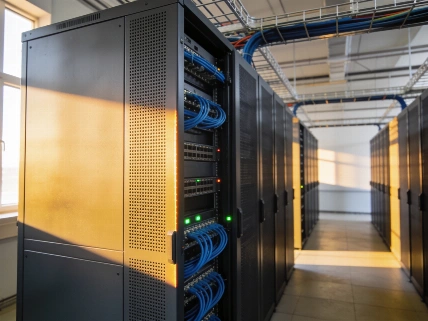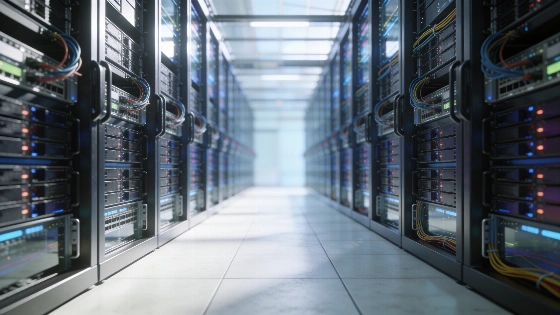
Cassava Technologies operates an AI factory in Cape Town equipped with 2,048 NVIDIA GPUs. The facility gives South Africa an existing base as President Cyril Ramaphosa seeks investment to expand the country's role in artificial intelligence. Cassava executive Ziaad Suleman has described the facility as part of a broader infrastructure need, including secure networks and usable services alongside computing hardware.
Ramaphosa travelled to the United States with approximately 300 South Africans. The delegation included 27 postgraduate students with AI knowledge and about 24 startups, alongside government officials. Planned engagements with OpenAI, Anthropic, Microsoft and Google formed part of a wider effort to secure investment agreements and technology partnerships. On 16 November 2026, Ramaphosa told the delegation that South Africa should develop its own AI enterprises, applications and intellectual property rather than remain a consumer of foreign technology. He said the country should learn from Silicon Valley without trying to copy its model, and linked the visit to inclusive growth and job creation.
On 18 November, Ramaphosa addressed the South Africa and the AI Opportunity Conference in San Jose, held under the theme "Building the African AI Economy: Infrastructure, Investment and Innovation." He called for South Africa to become a preferred destination for investment in computing infrastructure serving the domestic economy and the wider African market, as outlined in the government conference address.
At the Semafor Silicon Valley & The World event, Ramaphosa said South Africa hosts almost 70% of the data centres established on the African continent. He also said the country's electricity generation capacity could support further development. On 20 November, he cited improved electricity generation as an attraction for data-centre investors and pointed to cooperation among universities, researchers, entrepreneurs and investors as a way to build a domestic AI ecosystem. He also named Amazon and Google among international companies establishing data centres in South Africa.
Local infrastructure and skills anchor the pitch
The Cape Town facility connects the investment appeal to infrastructure already in operation. In a November interview with TechTrendsKE, Cassava executive Ziaad Suleman described the AI factory and its GPU equipment. The pitch also draws on Ramaphosa's earlier case for linking data-centre growth with power supply and domestic industrial capacity, covered in his San Jose remarks.
Cassava has an arrangement to distribute Anthropic's Claude models through Amazon Bedrock. Its partnership with Mauritius Telecom aims to expand access to AI computing and services. The company is also part of a World Bank initiative with Nvidia to develop African AI computing capacity. These relationships reflect existing commercial activity alongside the investment and research connections Ramaphosa sought to build during the visit.
South Africa's startups and postgraduate students bring business and skills to the delegation. Google's African AI Lab has selected startups developing applications for local needs, with Kenya's Satlyt among the participants. The programme provides technical support and access to AI models. On 19 November, business leader Jabu Ngcaba proposed a R100 million fund, to be established with development-finance institutions and private-sector partners, to help local AI startups access computing infrastructure. The proposal was presented as a way to address the cost of computing power for entrepreneurs developing and scaling domestic products.
Market access comes with local requirements
Ramaphosa has argued that foreign companies must comply with South African policy to operate in the country. The Starlink entry dispute illustrates one such condition: regulatory requirements linked to Black Economic Empowerment have complicated the satellite internet service's access to the market.
The framework seeks to address economic inequalities created under apartheid, including limited Black ownership and participation in major businesses. Telkom has challenged aspects of the ownership rules, arguing that regulators should recognise contributions such as infrastructure investment and skills development.
Ramaphosa wants AI investment to support services in education and healthcare, and has also cited agriculture as an area for application. He has said the technology should create employment opportunities and called for global guardrails that keep humans in control of AI systems, citing job displacement and autonomous weapons as risks. On 19 November, Minister in the Presidency Khumbudzo Ntshavheni said engagements during the visit would inform a review of South Africa's Digital Transformation Roadmap and the development of AI guidelines with safeguards for safe development and use. Higher Education, Science and Innovation Minister Blade Nzimande called for concrete AI projects to follow the US visit.