The money has not yet been deployed. British International Investment expects roughly $800 million of its five-year climate finance plan for Southeast Asia to come from BII, with a similar amount raised from private investors, according to GMA Network’s breakdown.
The five-year target is expected to comprise about $800 million from BII and another $800 million mobilised from private investors.
Funding spans energy and essential infrastructure
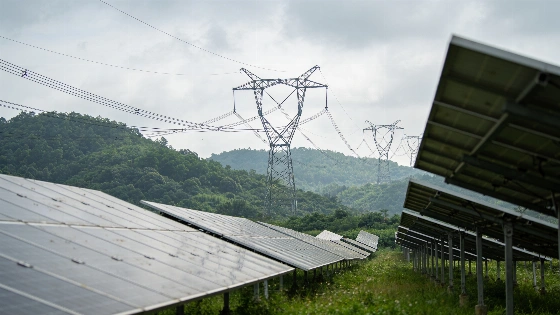
BII’s priority markets are Vietnam and Indonesia, along with the Philippines, Malaysia and Thailand. Planned investment covers renewable energy generation and electricity transmission. The programme also includes electric vehicle infrastructure. Waste management and water infrastructure are on the list too, according to the reported priorities.
That range matters. New generation cannot clean up a power system if the networks and supporting infrastructure lag behind.
Rohit Anand, BII’s head of infrastructure and climate direct investments in Asia, said equity capital remains scarce for developing new energy projects and companies. That shortage is a key barrier to drawing private investment into the sector.
Whether BCP draws private money at the planned scale will depend on whether projects move from development into operation.
Earlier commitments provide a regional track record
Between 2023 and 2025, BII committed nearly $400 million in climate finance in Southeast Asia. Its investments included renewable energy developers ib vogt and Skye Renewables. The portfolio also included the Asian Development Bank. In Vietnam, BII invested in VPBank and HDBank. In Indonesia, it backed Xurya.
BII also backed funds focused on green infrastructure and the energy transition. Those included Pentagreen Capital’s Green Investment Partnership. Its investments also covered Gresham House’s SUSI Asia Energy Transition Fund and 100×100 Impact Fund I.
BII says its existing infrastructure and climate portfolio has supported about 358 MW of operational clean-energy capacity. It has generated more than 556,000 MWh of renewable electricity and helped avoid approximately 368,000 tonnes of carbon emissions. The portfolio has supported more than 2,000 jobs. BII counts direct and operational roles in that figure, along with temporary construction jobs. These figures describe the existing portfolio, not results from the new target.