Minister of Trade, Industry and Competition Parks Tau credited the Export Credit Insurance Corporation of South Africa (ECIC) with more than 87,000 jobs and R21.7 billion in GDP since its establishment. At the agency's 25th-anniversary event in Sandton, he put its contribution to tax revenue at approximately R7.9 billion. The South African Government News Agency reported the figures as cumulative impacts over ECIC's operating history.
Tau said ECIC had unlocked R1.06 trillion in capital across sectors including rail, mining, power, manufacturing and telecommunications. That cumulative figure represents capital facilitated over the agency's 25 years; its current portfolio stood at R33.2 billion, he said. Established in 2001 under the Export Credit and Foreign Investments Insurance Act, 1957, as amended, ECIC operates as a self-sustaining state-owned export-credit agency. It insures South African exporters of goods and related services against political and commercial risks, helping qualifying transactions secure financing.
Projects and market exposure
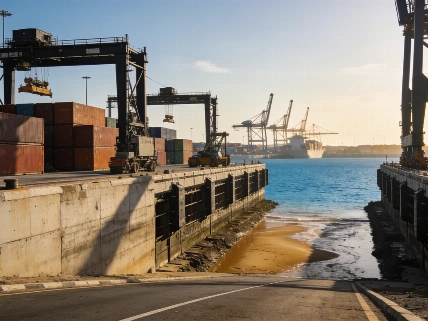
ECIC-supported projects include the Maputo Port expansion and the Nacala Rail Corridor. Its reported exposures also include Sasol's natural-gas pipeline from Mozambique, Konkola Copper Mines in Zambia, gold mines in Tanzania, MTN in Nigeria, Vodacom in Tanzania and the Cenpower power project in Ghana. The portfolio spans infrastructure, natural resources, energy and telecommunications across African markets. Tau said the projects carried South African engineering, construction and services into new markets, as Engineering News reported.
Three countries account for 88% of ECIC's portfolio. Tau said the corporation is pursuing a "butterfly" trade strategy to diversify its exposure as trade patterns shift and geopolitical risks change.
He said ECIC intended to expand its footprint across the Atlantic and Indian oceans while deepening its involvement in Africa through the African Continental Free Trade Area (AfCFTA). Its Class A membership of Afreximbank is also intended to help expand trade finance for AfCFTA transactions.
Export finance and risk-sharing
ECIC is moving beyond its traditional focus on large, long-term projects into short-term export-credit insurance. Tau said the offering would help small and medium-sized enterprises, black industrialists and emerging manufacturers enter foreign markets. He said South Africa's export future could not depend solely on large projects and established companies. The corporation would also continue supporting black-owned rail companies.
Government is advancing plans for a South African Export-Import Bank to address financing gaps and encourage commercial lending through credit lines, guarantees and risk-sharing. Tau said the proposed agency would share and absorb risk so private capital could participate. "It will not compete with commercial banks. It will fill the gaps the market cannot through credit lines, guarantees and risk-sharing that crowd in commercial lending."
Public infrastructure finance takes different forms across the region. The Nigerian road-project approvals covered in this report on road funding offer a separate example. ECIC is a self-sustaining, state-owned export-credit agency that insures loans and investments against commercial and political risks to support South African exports and related services.