
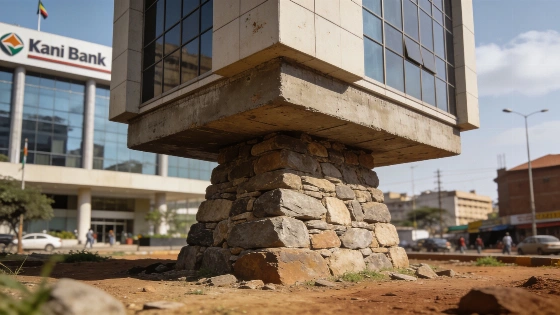
CBK has made its case for stronger bank balance sheets directly to the National Treasury while seeking capital plans from a small group of lenders. Governor Kamau Thugge told the National Assembly’s Finance and Planning Committee that one or two banks could have difficulty reaching KSh5 billion by the end of 2026.
The regulator asked the affected banks to explain how they planned to meet the threshold. Techtrendske reported Thugge saying that “Only a few, maybe one or two, might struggle.” He described the discussions as a way for CBK to understand their plans to strengthen capital.
A revised legal timetable leaves CBK focused on the earlier target
The Finance Act 2026 removed the annual milestones for reaching KSh10 billion in minimum fundamental capital and extended the deadline to December 31, 2032. The earlier schedule set targets of KSh3 billion for December 2025 and KSh5 billion for December 2026. CBK continues to engage with banks over the KSh5 billion figure despite that change. The planned increase raises the minimum from KSh1 billion to KSh10 billion. That structural shift has put pressure on smaller lenders and increased incentives to seek strategic investment or consolidate.
FirstRand has reportedly stepped up its search for a Kenyan banking chance amid regional competition. The report did not identify a target bank or describe a signed acquisition agreement. The phased increase originated in the Business Laws (Amendment) Act 2024, which raised minimum fundamental capital from KSh1 billion towards KSh10 billion. In a parliamentary presentation in June 2026, National Treasury Cabinet Secretary John Mbadi said the government supported stronger bank capitalisation while seeking a transition that would limit disruption to lending and financial services. The Treasury also stressed access to credit for micro, small and medium-sized enterprises, as well as institutions serving niche markets.
CBK links capital to ability to recover and lending capacity
Thugge said stronger capital would help banks withstand climate-related shocks and cybersecurity threats. He also argued that well-capitalised institutions would be better placed to invest in technology and finance larger projects. CBK has written to the Treasury to explain its position on banks’ capital needs.
The discussion concerns commercial banks’ ability to absorb losses and support lending. Banks also weigh lending to households and businesses against investment in government securities, an alternative use of their balance sheets shaped by returns, risk and capital requirements. Separate reporting on Kenyan merchant services has covered providers adding financing and business tools. CBK’s capital engagement focuses on bank ability to recover and the revised minimum-capital timetable.








