Mining supplied about 55 per cent of Ethiopia’s export revenue in the first quarter of the 2026/27 fiscal year. Manufacturing went the other way: earnings fell from a year earlier and reached just 64.6 per cent of the sector’s quarterly target.
Overall export revenue rose 25.75 per cent to US$3.14 billion, information from figures from the Ministry of Trade and Regional Integration. The US$642.59 million increase brought earnings to 96.5 per cent of the government’s US$3.25 billion quarterly target.
Gold drives the mining surge
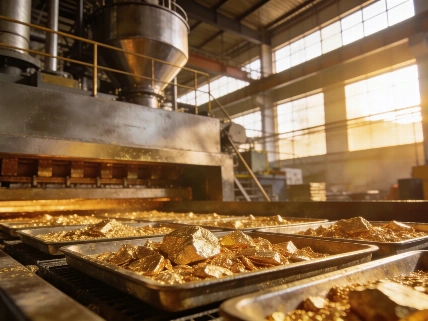
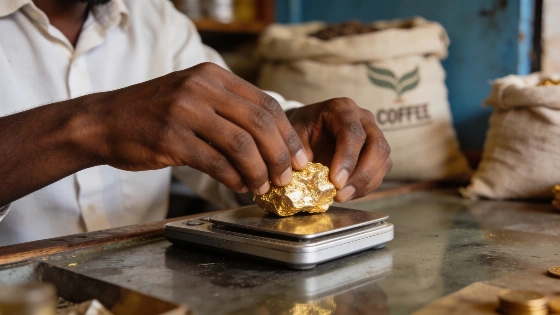
Mining generated US$1.73 billion, beating its US$1.68 billion target by 2.8 per cent. Earnings were US$505.85 million higher than the US$1.22 billion recorded in the same period a year earlier. The ministry linked much of the rise to increased gold deliveries by traditional producers to the National Bank of Ethiopia, following changes under the government’s macroeconomic reform programme.
Gold became Ethiopia’s largest export commodity after the market-based foreign exchange system was introduced in July 2024. It earned about US$5.5 billion in 2025/26, close to half of merchandise export revenue. The National Bank of Ethiopia has paid premiums above international gold prices to encourage artisanal miners to use official channels. As official purchases grow, the bank is expected to reduce those premiums gradually. One Africa Magazine reported that gold and coffee together accounted for 78 per cent of merchandise-export revenue in 2025/26. Gold prices had reached nearly US$2,787 per ounce in October 2024, a 27 per cent rise. The magazine said the export mix was moving away from the government’s diversification objective as gold and coffee took a larger share.
The figures come amid household concerns covered in household pressures, including rising inflation and a weakening birr. Households also face a new minimum tax. Exports brought in more foreign currency, while manufacturing remained below both its target and its year-earlier result.
Manufacturing and agriculture diverge
Manufacturing earned US$111.40 million against a target of US$172.45 million. The shortfall was US$61.05 million, and revenue was US$750,000 below the US$112.15 million recorded in the corresponding quarter last year. Foreign-currency access remained a constraint for import-dependent firms. Capital Ethiopia reported a US$1.4 billion commercial-bank backlog of foreign-exchange requests in late April 2026, while the official banking rate was around 163 birr per US dollar. The same report put the official-to-parallel rate gap at roughly 15 per cent in early 2026.
Nine operational industrial parks generated about US$47.4 million in export revenue. Several sit along the Ethiopia-Djibouti railway corridor, which links manufacturing centres with the country’s basic maritime trade route. Hawassa has also expanded into solar panel production as the industrial park network moves beyond textiles and garments. Limited workforce skills and weak links with domestic suppliers continue to hold back local manufacturing supply chains.
Agriculture earned US$1.22 billion, reaching 91.5 per cent of its US$1.34 billion target. Revenue rose US$178.94 million from approximately US$1.04 billion in the same period a year earlier. The ministry said exports of pulses and oilseeds improved after action against illegal stockpiling. It also tightened quality controls. The ministry cited better access to exportable goods and revised benchmark prices. Lower transport costs through Ethiopian Railways also helped.
Changes to the trading structure let suppliers and exporters make direct contracts instead of relying exclusively on the Ethiopian Commodity Exchange. The ministry says the measures are intended to curb illicit transactions and hoarding, while improving the flow of agricultural goods into export markets.
Electricity exports reached 121.1 per cent of their quarterly target, but the ministry did not publish a separate revenue figure. Products it monitored directly earned US$225.78 million, beating a target of US$174.03 million and rising US$76.84 million from a year earlier.
The annual target requires a stronger pace
The quarterly results come during a macroeconomic reform programme backed by the International Monetary Fund, after Ethiopia liberalised its foreign exchange market in July 2024. The reforms shift the country toward a more market-oriented system, with a market-determined exchange rate and an interest-rate-based monetary structure. They also reduce direct basic-bank financing of government deficits. Capital Ethiopia has reported that the changes opened previously protected sectors to private and foreign investment. The Fund reported that the country met all quantitative performance criteria and most indicative targets, with macroeconomic outcomes exceeding earlier expectations.
Foreign investment rose alongside export revenue. The Ethiopian Investment Commission reported US$1.432 billion in foreign direct investment in the first quarter of 2026/27, 49 per cent higher than a year earlier and 59 per cent above the quarterly target, according to 2merkato’s report.
The government’s export target for 2026/27 is US$13.4 billion, nearly 20 per cent above the record US$11.2 billion reported in 2025/26. Reaching it would require another US$10.26 billion over the remaining nine months, or an average of about US$3.42 billion per quarter.